
Christmas with pets
Christmas hazards for pets: what to keep out of reach
Chocolate, dried fruit, festive plants, tinsel and even wrapped presents can cause problems for dogs and cats. Christmas brings extra food, plants, decorations and visitors into the home, and most of the risks are preventable. Here is what to move, and what to do if something goes wrong.
If it has already happened
Think your pet has eaten something dangerous?
Contact a vet for advice straight away. Do not wait for symptoms, and do not try to make your pet sick.
Call, even if they seem fine.
Some effects are delayed, and early advice can change what treatment is appropriate. Do not wait to see whether symptoms develop.
Do not induce vomiting.
RSPCA and the Veterinary Poisons Information Service both advise against owners trying to make a pet vomit, and specifically against using salt water.
Keep the packaging.
Take the wrapper, ingredient list or a safe sample with you if you are asked to.
Have this ready when you call.
What was eaten, roughly how much, when it happened, your pet's approximate weight, and whether they are showing any symptoms.
On symptoms
Signs vary widely depending on the substance, and may include vomiting, diarrhoea, unusual tiredness, agitation, tremors, seizures, changes in breathing or collapse.
But some poisons cause delayed effects. The absence of symptoms does not mean the exposure was safe.
Know your out-of-hours arrangement
Veterinary practices must ensure clients can access emergency care, but that service may be provided by the practice itself, another local practice, or a dedicated emergency clinic. Emergency treatment usually costs more than routine care.
Find out who covers your practice over Christmas and the Bank Holidays before you need them, and save the number.
Prevention first
Pet-proof Christmas before it starts
Five changes that prevent most of what follows.
Move the food.
Chocolate, mince pies, Christmas cake, pudding and alcohol above pet level, and out of bags and presents.
Check the flowers.
If you have a cat, avoid true lilies entirely. Keep other festive plants out of reach.
Secure the tree.
Stable base, cables tucked away, fragile and edible decorations higher up.
Create somewhere quiet.
Give pets a place they can leave the noise and the visitors behind.
Save the emergency details.
Know who provides your vet's Christmas and out-of-hours cover, in advance.
The Christmas table
Which Christmas foods are dangerous for pets?
Chocolate, dried grape products such as raisins and sultanas, onions and garlic, alcohol, xylitol and macadamia nuts can all cause poisoning. Cooked bones and rich, fatty leftovers are dangerous for different reasons, and the distinction matters.
There is a real difference between food that can poison a pet and food that is simply too rich or physically dangerous. A turkey bone is not a poison. A pig in blanket is not toxic. Both can still cause serious problems.
Most consumer articles flatten all of it into "poisonous", which is inaccurate and less useful.
| Christmas item | Main concern | Particularly relevant to |
|---|---|---|
| Chocolate | Main concern:Theobromine and caffeine poisoning | Relevant to:Dogs especially; also unsafe for cats |
| Raisins, sultanas, currants, grapes | Main concern:Risk of acute kidney injury | Relevant to:Especially dogs |
| Mince pies, Christmas cake, pudding | Main concern:Dried grape products, sometimes alcohol | Relevant to:Especially dogs |
| Onion, garlic, leeks, shallots, chives | Main concern:Damage to red blood cells | Relevant to:Dogs and cats |
| Xylitol | Main concern:Rapid fall in blood glucose, liver injury | Relevant to:Dogs |
| Alcohol | Main concern:Neurological and metabolic effects | Relevant to:Dogs and cats |
| Macadamia nuts | Main concern:Weakness, tremors, raised temperature | Relevant to:Dogs |
| Rich, fatty leftovers | Main concern:Digestive upset, pancreatitis risk | Relevant to:Dogs and cats |
| Cooked bones | Main concern:Choking, obstruction, perforation | Relevant to:Dogs and cats |
| Mouldy food and bin waste | Main concern:Mycotoxins causing tremors and seizures | Relevant to:Particularly dogs |
Why is chocolate dangerous for dogs?
Chocolate contains theobromine and caffeine. Dogs are particularly vulnerable, and how serious an exposure is depends on the type of chocolate, the quantity eaten and the dog's size.
Dark chocolate generally contains considerably more theobromine than milk chocolate. White chocolate does not present a meaningful theobromine risk because it contains no cocoa solids, though its fat content can cause other problems.
VPIS reports that around a fifth of the chocolate cases reported to it occur in December.
The Christmas traps people forget: advent calendars, chocolate coins, tree decorations, boxes on low tables, wrapped edible gifts under the tree, chocolate-covered raisins.
If your dog has eaten chocolate, call your vet rather than trying to judge the risk yourself. The type, the amount and your dog's weight all matter.
Why are raisins and mince pies dangerous?
Grapes and dried grape products can cause acute kidney injury in dogs, and there is no reliable toxic dose. Susceptibility varies between individuals, and you cannot know in advance whether your dog will be affected.
That is why "it was only one mince pie" is not reassurance.
The Christmas problem is how well hidden they are: mince pies, Christmas pudding, Christmas cake, fruit cake, stollen, some panettone, chocolate-coated raisins.
On cats: the evidence for kidney injury is principally in dogs, though other species may potentially be affected. Grapes and raisins should be kept away from cats too, and if either pet eats them, contact your vet.
Why are onions and garlic a problem?
Onions, garlic, leeks, shallots and chives can damage red blood cells and cause anaemia in dogs and cats. Cooking does not make them safe.
At Christmas the risk is rarely the obvious one. They are hidden in stuffing, gravy, bread sauce, casseroles, stock and leftovers.
It is usually the gravy or the stuffing rather than the plain turkey that causes the problem.
Signs can be delayed, so a pet looking well immediately afterwards is not evidence that nothing happened.
What is xylitol and why does it matter?
Xylitol is a sweetener found in some sugar-free sweets and gum, baked goods, nut butters, medicines and dental products. It is particularly dangerous to dogs, and can cause a rapid fall in blood glucose and liver injury.
Check ingredient lists on sugar-free products and nut butters before they come within reach.
What about alcohol?
Alcohol is harmful to pets and can cause drowsiness, poor coordination, low body temperature, low blood sugar, and in severe cases seizures. The Christmas risk is not only a glass left on the floor: it is also in puddings, desserts, liqueur chocolates and uncooked dough.
Clear unattended glasses promptly.
Are cooked bones dangerous?
Yes, but not because they are poisonous. Cooked turkey and chicken bones can splinter, and can cause choking, obstruction or perforation of the digestive tract. PDSA takes the broader position that both raw and cooked bones carry dental, choking and gastrointestinal risks, with cooked bones particularly prone to splintering.
What about fatty leftovers?
Pigs in blankets, fatty meat, roast potatoes and cheese sauces are not toxic. They are dangerous because they are far richer, saltier and fattier than a pet's normal diet, and can cause vomiting, diarrhoea or contribute to more serious problems including pancreatitis.
And the bin?
Christmas means food waste. Mouldy food can contain mycotoxins capable of causing vomiting, tremors and seizures in dogs. Use a pet-proof bin, clear plates promptly, and do not leave bin bags waiting by a back door where a dog can investigate them.
Quick answers
"My pet has eaten something. What now?"
Short answers for the most common Christmas calls. In every case: contact a vet, do not induce vomiting, do not wait for symptoms.
- My dog ate a mince pie
- Contact your vet promptly, even if your dog seems well. Mince pies contain raisins, sultanas or currants, which can cause kidney injury in dogs and have no predictable safe dose.
- My dog ate chocolate
- Call your vet with the type of chocolate, roughly how much, and your dog's weight. Dark chocolate carries more theobromine than milk. Do not try to judge the risk from how your dog looks.
- My dog ate Christmas pudding or Christmas cake
- Contact your vet. Both usually contain dried grape products, and may also contain alcohol.
- My cat has pollen on its fur from a lily
- Contact a vet immediately. Cats groom pollen off their coat and swallow it, and all parts of a true lily can be dangerous to cats.
- My cat has swallowed tinsel
- Contact your vet. Long, string-like material can cause a serious intestinal obstruction, and cats are particularly at risk.
- My pet has chewed a battery
- Contact your vet urgently. Swallowed or chewed batteries can cause chemical burns to the mouth, throat or stomach.
- My dog ate the stuffing or licked the gravy
- Contact your vet for advice. Both commonly contain onion or garlic, which can damage red blood cells in dogs and cats, and the effects can be delayed.
- My dog ate a sugar-free sweet or gum
- Check whether it contains xylitol and contact your vet. Xylitol is particularly dangerous to dogs and can cause a rapid drop in blood sugar.
If what your pet ate is not on this list and you are unsure whether it matters, call anyway. Veterinary teams would far rather answer a call about something harmless.
The good news
Can dogs and cats have any Christmas dinner?
Some plain foods can be suitable in small amounts for an otherwise healthy pet. Plain, boneless, skinless white turkey, and small quantities of plain vegetables such as carrot or swede, are generally fine for dogs. Unseasoned, no sauces, no onion or garlic, no skin.
The safest position is simpler than that, though: their usual food, or a normal pet treat, is festive enough.
Anything you do give counts towards their daily intake, and Christmas is exactly when that gets forgotten.
If your pet has a medical condition or is on a prescribed diet, follow your vet's dietary advice rather than a general guide.
For cats: a small amount of plain cooked, boneless meat suits many healthy cats. Cats do not need a human Christmas meal, and the same exclusions apply.
Keep pets on their normal diet and treat human Christmas food as something they should not have access to unless you know exactly what is in it.
The simple version
Their usual food, or a normal pet treat, is festive enough. Plain turkey or plain vegetables in small amounts are fine for most healthy dogs, but nothing seasoned, no skin, no onion or garlic, and no bones.
Flowers and foliage
Which Christmas plants are dangerous for pets?
Lilies are the serious one, and specifically for cats. Poinsettia, mistletoe, holly and ivy are far less dangerous than their reputations suggest, though all are worth keeping out of reach.
Lilies and cats
All parts of a true lily, including the pollen, can be extremely toxic to cats and cause severe kidney damage.
Pollen transferred onto a cat's coat and then groomed off can be enough. If you think your cat has chewed a lily or has pollen on its fur, contact a vet immediately rather than waiting for symptoms.
If you have a cat, the simplest answer is not to have true lilies in the house at all.
On dogs: VPIS advises that lilies are not hazardous to dogs in the same way, and may cause only mild gastrointestinal upset if eaten. Do not let a general "toxic to pets" warning obscure that difference.
Poinsettia
Poinsettia has a far worse reputation than the evidence justifies. VPIS states explicitly that its toxicity reputation is greatly exaggerated. Eating it can irritate the mouth and stomach and cause drooling or vomiting.
Keep it out of reach. It is not in the same category as lilies for cats.
Mistletoe
European mistletoe, the species used in the UK, is considered low toxicity by VPIS. Eating the berries can cause gastrointestinal upset.
Much of the alarming advice online concerns American mistletoe, which is a different species. UK homes generally have European mistletoe.
Holly
Holly leaves and berries can cause gastrointestinal signs, and the stiff, spiny leaves are also a physical hazard.
Ivy
English ivy can cause gastrointestinal upset if eaten and skin irritation after significant contact.
A wreath is several hazards at once: ivy, holly, berries, wire and ribbon.
For a home with cats, lilies are the one plant that deserves a clear red line. The others deserve a high shelf.
The tree and what's under it
Are Christmas trees and decorations dangerous?
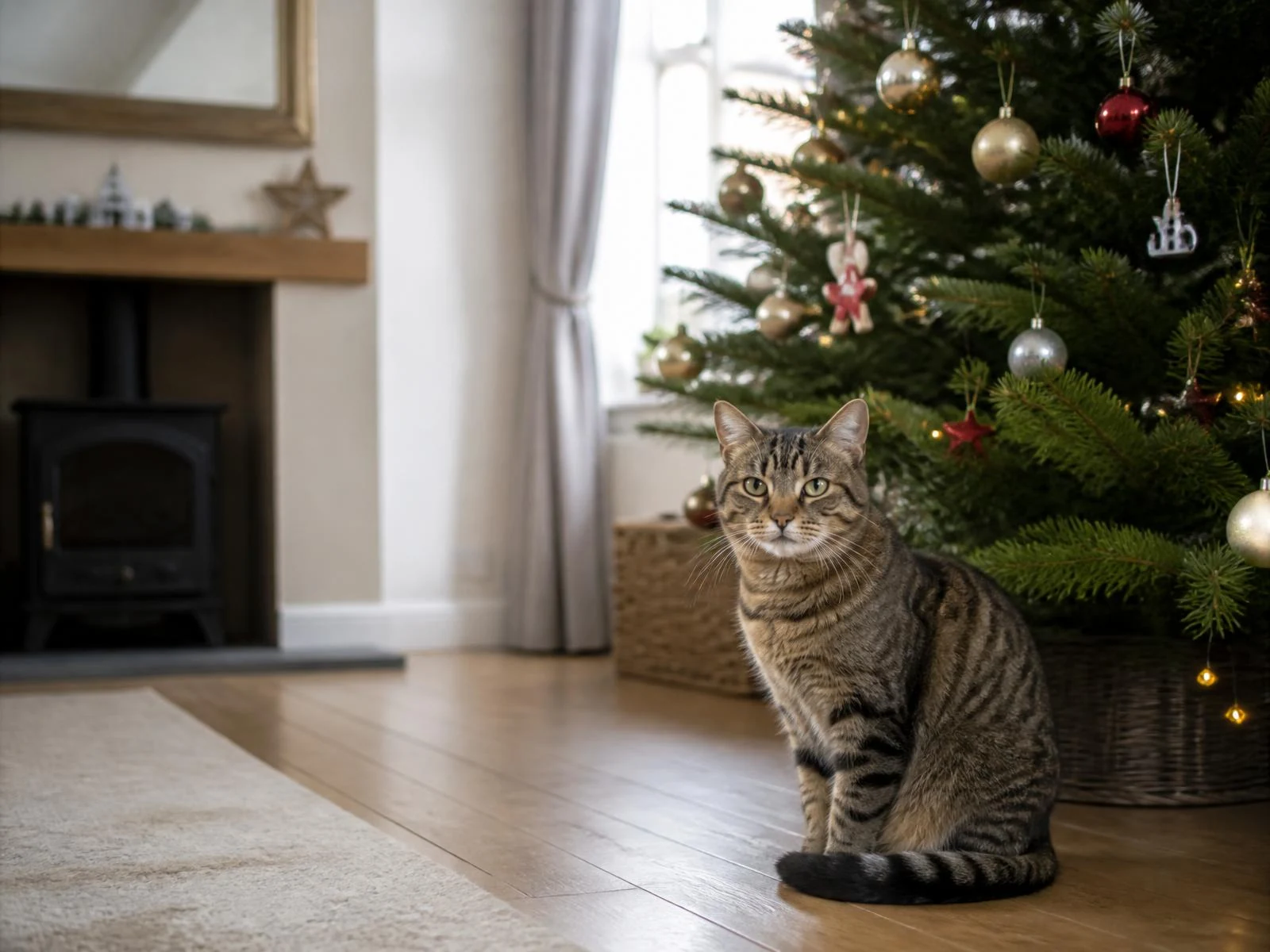
Mostly as physical hazards rather than poisons. Real Christmas trees are considered low toxicity. The greater risks are swallowed decorations, chewed cables, broken glass and a toppled tree.
The tree is more of a physical hazard than a poison
Chewing needles can cause mild gastrointestinal upset, and sharp needles can injure paws or contribute to problems if swallowed. The bigger issues are cats climbing and toppling it, broken ornaments, light cables, and standing water containing tree additives or fertiliser.
Use a sturdy base or anchor the tree, keep hanging decorations higher up, and switch lights off at the mains when the tree is unattended.
Tinsel and ribbon
The single biggest decoration risk, particularly for cats. Long, string-like material can be swallowed and cause a life-threatening intestinal obstruction that may need surgery.
Baubles
Broken glass can cut paws and mouths. Swallowed plastic or fragments can choke or obstruct. Keep glass higher, or do not use it.
Fairy lights and cables
Chewing can cause burns or electric shock. Cover cables where you can and switch off at the mains when unattended.
Tree hooks
Small metal hooks are easily swallowed. Safer fastening systems are worth the swap.
Crackers
The small plastic toys inside are choking and foreign body hazards. Clear them up before pets find them.
Candles
Open flames and a wagging tail, or a cat on a mantelpiece, are a burn and fire risk. Keep them away from pets and never leave them unattended.
Presents and wrapping
Wrapped does not mean pet-proof. A dog can smell food through paper.
Do not leave boxes of chocolates, food hampers or edible stocking fillers under the tree if your dog can reach them.
Christmas morning also brings ribbon, tape, elastic bands, gift labels, small toy parts, silica gel packets and foil.
Batteries deserve particular attention. They are in toys, decorations, remote controls and gifts. A swallowed or chewed battery can cause serious chemical burns to the mouth, throat or stomach. Contact a vet urgently if you suspect it.
Snow globes. Some may contain a liquid that is poisonous if swallowed. If one breaks, keep pets away from the liquid and check the product information.
Beyond the tree
Winter hazards that peak at Christmas
Antifreeze, and cats
Antifreeze is extremely poisonous to cats, and small amounts can be dangerous. Cats can encounter spills around vehicles, garages and driveways in winter, and may drink from contaminated puddles.
Clean spills immediately, store containers securely, and seek urgent veterinary advice if you suspect ingestion.
Human medicines, and visitors' handbags
Christmas is also cold and flu season, and NSAIDs are among the most common poison enquiries the specialist service receives.
The Christmas-specific version of this risk is a guest's handbag on the floor. It can contain ibuprofen, paracetamol, nicotine products, chewing gum and prescription medication.
Put visitors' bags somewhere pets cannot investigate. It is one of the most useful things on this page and almost nobody does it.
Road salt and grit
Wash salt and grit off paws and legs after walks, to reduce irritation and prevent pets swallowing it while grooming.
The busy house
Safe doesn't only mean "not poisoned"
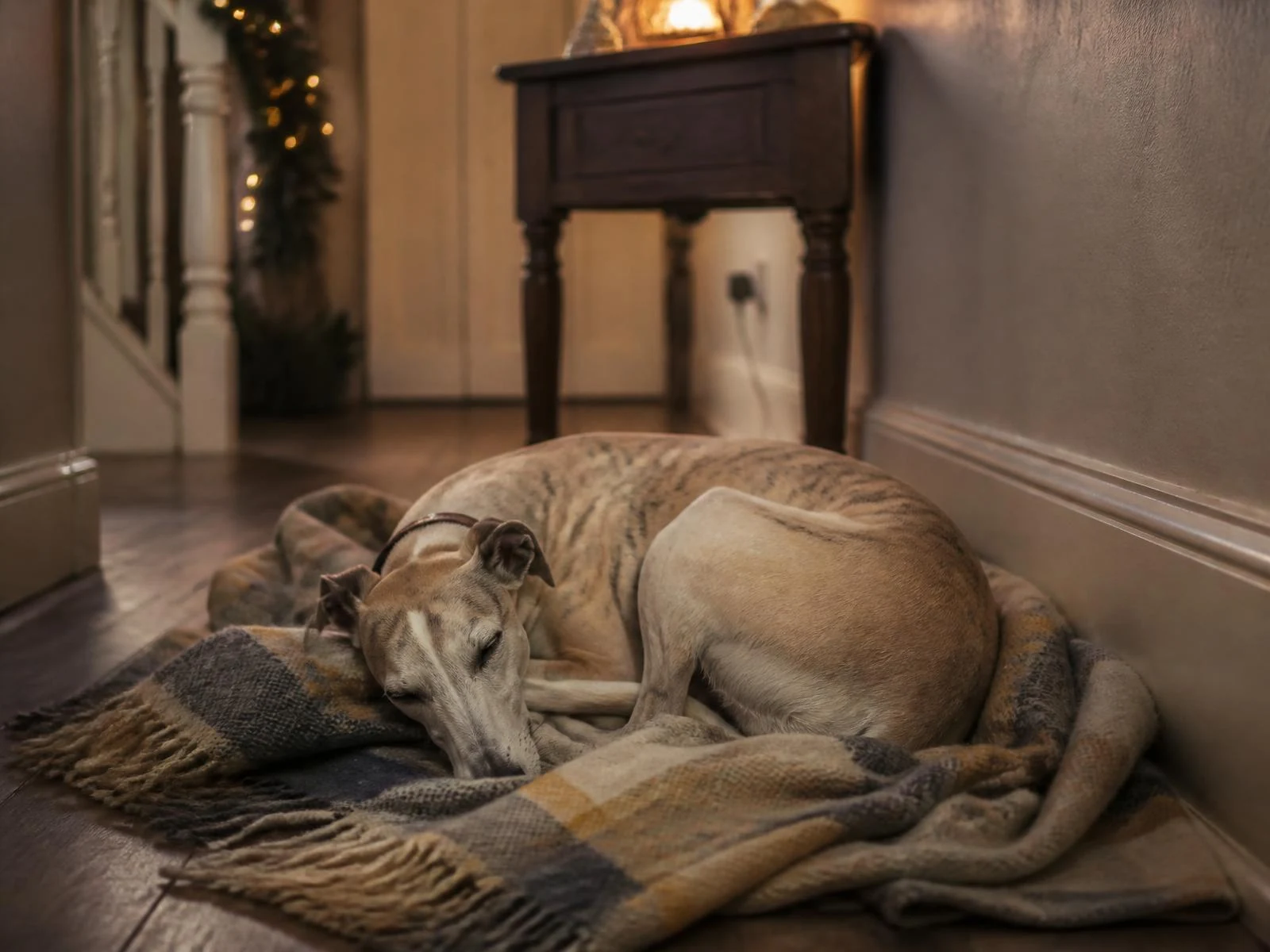
Christmas brings unfamiliar people, children, noise, crackers, moved furniture, different mealtimes and less rest. Some pets enjoy the attention. Others find it overwhelming, and stress is a genuine welfare issue rather than a soft one.
Keep the routine recognisable. Feeding, walks, toilet breaks, sleep and play, as consistent as you can manage.
Give them somewhere to leave. A safe space they can retreat to without being followed or disturbed. Dogs Trust recommends setting this up before a disruptive event, so the dog already thinks of it as safe. Cats Protection recommends hiding places or a separate quiet room with litter, water and somewhere to rest.
Do not force festive participation. Not every pet wants to meet every visitor. Let them approach people in their own time and leave when they have had enough.
Do not dress them up for the photograph. Cats Protection warns that fancy dress can restrict movement, interfere with grooming and cause stress. The same applies to any pet showing discomfort.
Tell your guests the rules
Before people arrive, tell them:
- Do not feed the pet from the table
- Keep chocolate and handbags out of reach
- Do not leave alcoholic drinks on the floor
- Do not disturb the pet in its safe space
- Close doors and gates carefully
The realistic risk is rarely the owner deliberately feeding chocolate. It is "Grandad only gave him a little bit."
Children and dogs
Children should be supervised around dogs, and should leave pets alone when they are eating or sleeping. Dogs Trust advises that a young child should never be left alone with a dog. Your pet's bed or safe space is not part of the party.
Doors
Christmas means people arriving and leaving repeatedly. If your pet is prone to door-dashing, put them somewhere secure before guests arrive, rather than managing the front door and the pet at the same time.
Two other situations
If you are going away
Arrange cattery, kennel or sitter care well in advance, and check any vaccination requirements early.
Before you leave, make sure whoever is caring for your pet has:
- Enough of their normal food
- Enough prescribed medication
- Your vet's details
- The out-of-hours or emergency contact
- Written care instructions
- Your contact details
- Carrier or lead where relevant
- Confirmation they understand any medical needs
Prescribed medication is easy to forget. Check you have enough to cover the Bank Holidays, before the practice closes.
Small pets need a quiet Christmas too
Rabbits, guinea pigs, hamsters and similar animals are often more disrupted by noise and visitors than dogs and cats, and the dog and cat food rules do not transfer cleanly.
- Keep normal feeding routines
- Keep enclosures away from speakers and heavy foot traffic
- Do not decorate cages with tinsel or fairy lights they may chew
- Keep visiting dogs and cats away from prey species
- Give species-appropriate food rather than Christmas leftovers
- Let nocturnal animals rest undisturbed during the day
One short note on Christmas pets
A pet is not a surprise present. If someone is genuinely planning to get an animal, involve them in choosing and preparing rather than surprising them on Christmas morning. PDSA advises against surprise gifts because the recipient may not have the time, finances or environment to meet the animal's needs, and Christmas is a difficult time for a new animal to settle.
Ten minutes, well spent
The Christmas Eve checklist
- Check chocolate and food gifts are not under the tree
- Move mince pies, cake and pudding out of reach
- Remove true lilies if you have a cat
- Secure the tree
- Check tinsel and ribbon cannot be swallowed
- Put batteries and small toy parts away
- Move guest handbags upstairs or onto a high surface
- Set up your pet's quiet space
- Check you have enough prescribed medication for the Bank Holidays
- Save your vet's Christmas and out-of-hours number
Common questions
Christmas pet safety questions
Yes. Chocolate contains theobromine and caffeine, and dogs can become unwell after eating enough relative to their body size. Dark chocolate generally contains more theobromine than milk chocolate. Contact your vet with the type, the amount and your dog's weight, and do not try to make them vomit.
Contact your vet promptly, even if your dog looks well. Mince pies commonly contain raisins, sultanas or currants, which can cause kidney injury in dogs and have no reliably predictable toxic dose.
Yes, they can be. Both commonly contain dried grape products and may also contain alcohol. Contact your vet if your dog has eaten either.
Some plain foods can be suitable in small amounts for an otherwise healthy dog, such as plain, boneless, skinless turkey and some plain vegetables. Avoid stuffing, gravy, anything containing onion or garlic, cooked bones and rich fatty food. Follow your vet's advice if your dog is on a prescribed diet.
A small amount of plain cooked, boneless meat suits many healthy cats. They do not need a human Christmas meal. Keep onion, garlic, chocolate, alcohol and unsuitable leftovers away from them.
Less than their reputation suggests. UK specialist poison guidance says the poinsettia's toxic reputation is greatly exaggerated. Eating it can irritate the mouth and stomach and cause drooling or vomiting. Keep it out of reach, but it is not comparable to lilies for cats.
Yes, seriously. All parts of a true lily, including the pollen, can cause severe kidney injury in cats. Pollen groomed off the coat can be enough. Contact a vet immediately following suspected exposure rather than waiting for symptoms.
Not in the same way. UK specialist guidance advises that lilies are not hazardous to dogs as they are to cats, and may cause only mild gastrointestinal upset if eaten.
European mistletoe, the species used in the UK, is considered low toxicity, though eating the berries can cause gastrointestinal upset. Much of the more alarming advice online concerns American mistletoe, a different species.
Yes, if swallowed. Tinsel and other long, string-like decorations can cause serious intestinal obstruction, which may require surgery. Contact your vet if you know or suspect your cat has swallowed it.
Contact a vet promptly. Do not try to make your pet vomit and do not use salt water. Keep any packaging or ingredient information, and tell the veterinary team what was eaten, roughly how much, and when.
Yes. Veterinary practices must have arrangements so clients can access emergency care, though it may be provided by another practice or a dedicated out-of-hours clinic rather than your usual surgery. Check your practice's Christmas arrangements before the Bank Holidays.
It may cover eligible veterinary treatment, depending on the policy. Cover depends on the policy type, limits, excess, waiting periods, exclusions and medical history rather than on when the treatment happened.
Could pet insurance help with a Christmas emergency?
Potentially, depending on the policy and what happened.
Veterinary fee cover is the core element of pet insurance and can cover eligible diagnosis and treatment of illnesses or injuries, including consultations, tests, medicines, surgery and hospitalisation.
Whether a particular event is covered depends on the policy type, how the event is defined, waiting periods, the vet fee limit, the excess, the exclusions and your pet's medical history. Check the wording rather than assuming a specific emergency would be covered.
About this guide
This guide draws on UK veterinary and welfare guidance and is not a substitute for advice from a vet about your individual pet. If you think your pet has been exposed to something harmful, contact a vet rather than relying on any online guide.
Last reviewed: 20 August 2026
Sources: Veterinary Poisons Information Service, British Veterinary Association, Royal College of Veterinary Surgeons, RSPCA, PDSA, Cats Protection, Dogs Trust, Association of British Insurers.