


HELP WITH VET COSTS
WORRIED YOU CAN'TAFFORD A VET BILL?
There are usually more options than people expect, and the first one costs nothing. Here is what to say to your veterinary practice, what to ask them, and which charities may be able to help.
If your pet is unwell or injured, contact a veterinary practice now rather than delaying because you are worried about money.
Tell them cost is a concern when you call. They would far rather have that conversation than see an animal arrive later and sicker.
Delaying care because of the cost can make both the illness and the bill worse.
START HERE
Four things to do first
Speak to the practice and say cost is a concern
Tell them what you can realistically afford. They can explain what your pet needs, what it is likely to cost, and whether there are clinically appropriate options at different prices. This is the single most useful thing you can do, and practices have this conversation often.
Check any insurance you already have
Look at your policy, or call your insurer. Ask whether the treatment may be covered, and whether the vet can claim directly.
Check whether a charity can help
Depending on where you live, the benefits you receive and your circumstances, you may qualify for free, low-cost or supported veterinary care. Details are further down this page.
Ask about spreading the cost
Some practices offer ways to pay over time, sometimes through a credit provider. Availability and terms vary, so ask what is available before relying on it.
You do not have to do these in order, and you do not have to do all four. Start with the first one.
THE HARD PART
What to say when you call
Most people find the money conversation harder than the phone call itself. These are worth having in front of you. Say them in your own words, or read them as they are.
When you first call
“Hi. My pet needs veterinary care and I'm worried about what I can afford. My budget is limited. Could you tell me what I need to do next, and explain the likely costs before we agree any non-emergency treatment?”
Asking about treatment options
“Could you explain which parts of the treatment are necessary now, whether there are any clinically appropriate alternatives at a different cost, and what the difference in risks or likely outcomes would be?”
Asking for the costs in writing
“Could I have the estimated costs in writing, with a breakdown if possible? Please let me know if anything changes enough to increase the estimate.”
Asking about paying over time
“I may not be able to pay the full amount at once. Does the practice offer any way to spread the cost? If it involves credit, could you tell me who provides it, whether there is interest or any fees, and what the total amount repayable would be before I apply?”
If your pet is already insured
“I have pet insurance. Are you able to submit a direct claim to my insurer? Could you also tell me what I would still need to pay myself, such as the excess or anything the policy does not cover?”
If medication will be ongoing
“If this medication is long term, could you tell me the practice price, and whether a written prescription would let me get the same prescribed medicine elsewhere? What would the prescription fee be?”
It is fine to say that cost is a concern. It is not something to apologise for, and it helps the practice understand what they are working with.
CHECK YOUR ELIGIBILITY
Charities that may be able to help
Depending on where you live, the benefits you receive and your pet’s circumstances, you may qualify for free, low-cost or supported veterinary care. Each charity sets its own criteria, so check directly with them rather than assuming.
PDSA
PDSA provides free or low-cost veterinary services for eligible owners. Eligibility depends on things including whether you receive qualifying benefits and whether you live near a participating PDSA facility.
It has an online checker that asks for your postcode, benefits and pet details, and tells you whether you qualify and where your nearest service is.
Blue Cross
Blue Cross runs two separate things, and the difference is worth knowing.
It has an eligibility checker for low-cost veterinary treatment at a Blue Cross animal hospital, based on postcode and eligible benefits. Geographical criteria apply, so this depends on living near one.
It also operates a separate Veterinary Care Fund, which may help people struggling to afford a vet bill. It is eligibility-based rather than an entitlement.
RSPCA
Some local RSPCA branches and hospitals may be able to provide financial help with veterinary care. Availability varies considerably by area, because it is provided locally rather than nationally.
The RSPCA information covering this assistance relates to England and Wales.
These are eligibility-based services, not guarantees. Check with the charity directly before relying on support, and tell your veterinary practice if you are waiting on an answer.
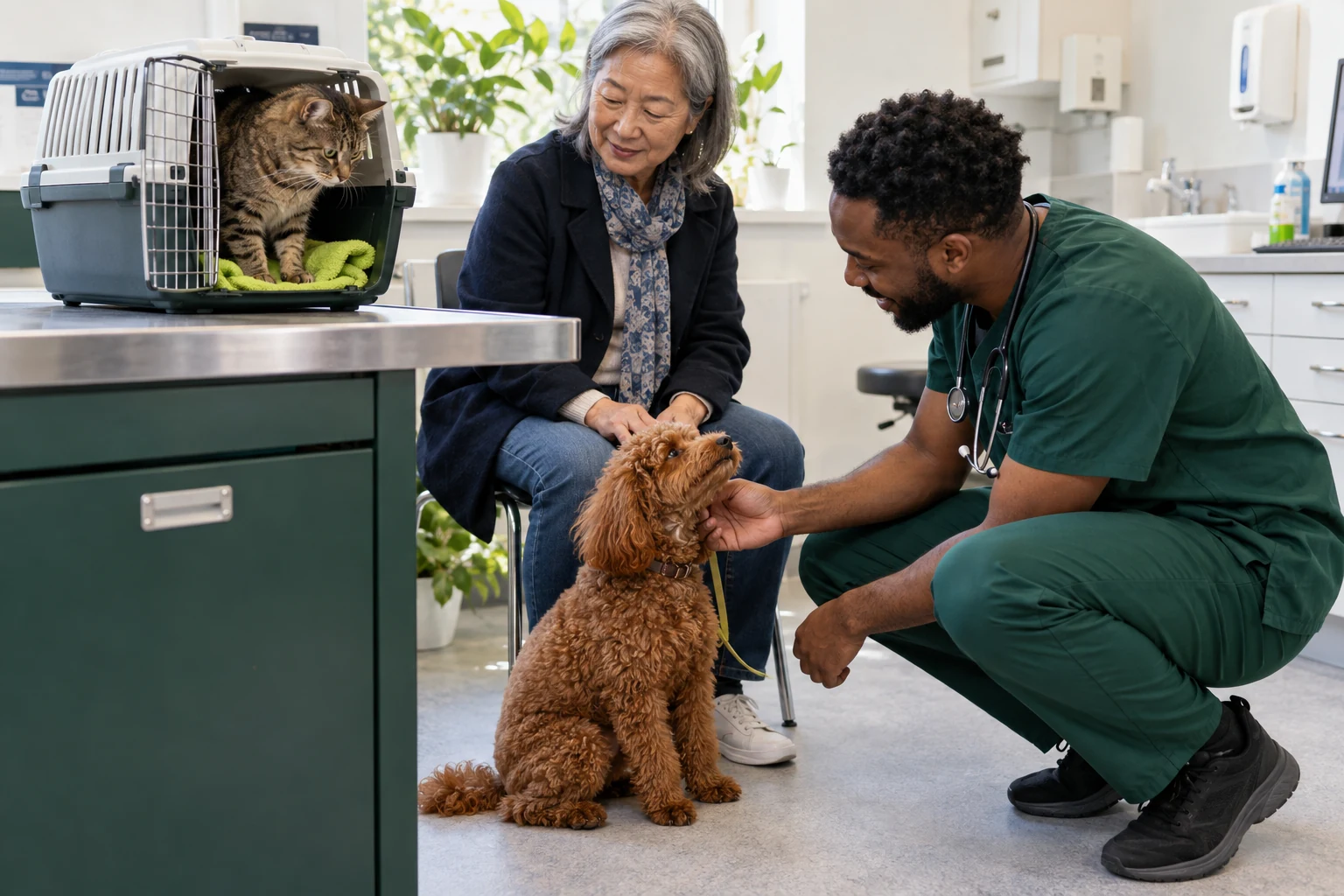
ALREADY INSURED?
Check how your cover actually works
If you have a policy, two things are worth establishing quickly.
Whether the treatment may be covered. Check your policy documents or call your insurer. Cover depends on the policy type, the vet fee limit, the excess, the exclusions and your pet’s history. Nobody can tell you it will definitely be paid until a claim has been assessed.
Whether the vet can claim directly. Some insurers can pay a participating practice directly, where the practice agrees and the claim is accepted. That can make a real difference to cash flow, because it may mean you do not have to fund the whole bill and wait for reimbursement.
It is not automatic. It depends on the insurer, the policy, whether that practice takes direct claims, and whether the claim is accepted. Ask both.
Even where a direct claim works, you would normally still owe the excess, any percentage contribution, and anything the policy does not cover.
OTHER OPTIONS
Other things worth asking about
Ask for a written estimate. Ask what the proposed care is expected to cost and which items make up that figure. Knowing the breakdown makes every other conversation easier.
Ask whether the cost can be spread. Some practices offer a way to pay over time, and some do this through a third-party credit provider. Not every practice can. Ask what is available rather than assuming it will be.
If credit is involved, ask these before agreeing: who provides it, whether there is interest, whether there are fees, what the total amount repayable would be, and what happens if you miss a payment.
Ask about a written prescription. For ongoing medication, ask whether a written prescription would let you get the same prescribed medicine elsewhere, and what the prescription fee would be. Prices vary, and some owners pay less overall this way even after the fee. This applies only to medicine your vet has prescribed. Never substitute anything else.
Ask about alternatives. Ask whether there is a clinically appropriate alternative approach at a different cost, and what the difference in risks or likely outcomes would be.
That question is for the vet to answer, not for you to decide from a website. Lower cost does not mean medically equivalent, and this page cannot tell you which option is right for your animal.
For non-urgent treatment, you can ask about prices elsewhere. Veterinary fees vary between practices. If treatment is not urgent, you can ask what other practices charge.
If the treating vet considers the care urgent, do not delay it to shop around.
A COMMON QUESTION
Can new pet insurance pay a bill you already have?
In short
Can new pet insurance pay a bill you already have?
No, not normally.
A new policy will generally not cover a condition that already existed or had already started before the policy began. Most policies also include an initial waiting period before illness cover starts. Our guide to pre-existing conditions explains how that is usually treated.
So buying insurance today will not usually help with treatment your pet needs today. It is worth being clear about that, because it is a natural thing to hope.
Pet insurance is designed for costs that arise in future, after cover begins. If that is something you want to look at once the current situation is resolved, there is a link at the bottom of this page.
Do not let this stop you asking the other questions on this page. Those are the ones that may help now.
IF THE TREATMENT HAS ALREADY HAPPENED
If you already have a bill you cannot pay
This is a different situation from working out how to fund upcoming treatment, and the advice changes.
Contact the practice rather than waiting. An unpaid bill does not improve by being left, and a practice is far more likely to work with someone who has been in touch than with someone who has gone quiet.
Ask what arrangements are possible. Some practices can agree a payment arrangement for an outstanding balance. Terms vary, and the same credit questions above apply if a third party is involved.
Ask for an itemised bill if you have not had one, so you understand what you are being charged for.
Charity eligibility is still worth checking, though most support is intended for upcoming treatment rather than existing debt. Check directly.
If debt is becoming a wider problem, free debt advice is available from organisations including Citizens Advice, StepChange and National Debtline. This page does not give debt advice. Those services do, and they are free.
COMMON QUESTIONS
Common questions
Speak to the practice and tell them cost is a concern. They can explain the options, what treatment is needed now, and whether there is any way to spread the cost. Check any existing insurance, and check whether you qualify for charity support.
Some practices do, sometimes through a third-party credit provider. Not all practices can offer this. Ask what is available rather than assuming, and ask about interest, fees and the total repayable if credit is involved.
Payment arrangements are set by each practice, so availability varies and there is no entitlement to one. It is still worth asking, and worth asking early rather than after treatment.
PDSA provides free or low-cost veterinary services for eligible owners. Eligibility depends on factors including qualifying benefits and living near a participating facility. Use its online checker to see whether you qualify.
Some local RSPCA branches and hospitals may be able to provide financial assistance. It is provided locally, so availability varies by area. The national RSPCA information covering this relates to England and Wales.
Blue Cross has an eligibility checker for low-cost treatment at its animal hospitals, which depends on location and eligible benefits. It also operates a separate Veterinary Care Fund. Check current criteria with Blue Cross directly.
You can usually buy a policy, but a condition that has already started is generally treated as pre-existing and excluded. Policies also normally include a waiting period. A new policy will not usually help with treatment your pet needs now.
Sometimes. Some insurers can pay a participating practice directly where the practice agrees and the claim is accepted. It depends on the insurer, the policy and the practice. You would normally still owe the excess and anything not covered.
Ask your vet whether a written prescription is possible, and what the prescription fee would be. Prices vary, and some owners pay less overall this way. This applies only to medicine your vet has prescribed.
For non-urgent treatment, yes. Fees vary between practices. If the treating vet considers the care urgent, do not delay it in order to compare prices.
About this guide
This is general information, not a personal recommendation about insurance or credit. Cover, charity eligibility and payment options all vary. Check your policy, and speak directly to your vet, your insurer or the relevant charity about your circumstances.
Charity criteria change. The links on this page go to each organisation’s own current eligibility information rather than repeating figures that may be out of date.
Last reviewed: 11 September 2026
Sources: RSPCA, PDSA, Blue Cross, Financial Conduct Authority.
Pet insurance is designed to help with eligible veterinary costs that arise after a policy starts. It will not normally help with a condition that has already begun.