If your cat has shown signs of a condition, been investigated for it, or been treated for it before a policy starts, a new insurer will usually exclude it. How long that exclusion lasts varies. Some insurers review it after a defined period with no symptoms, advice or treatment. Others do not.
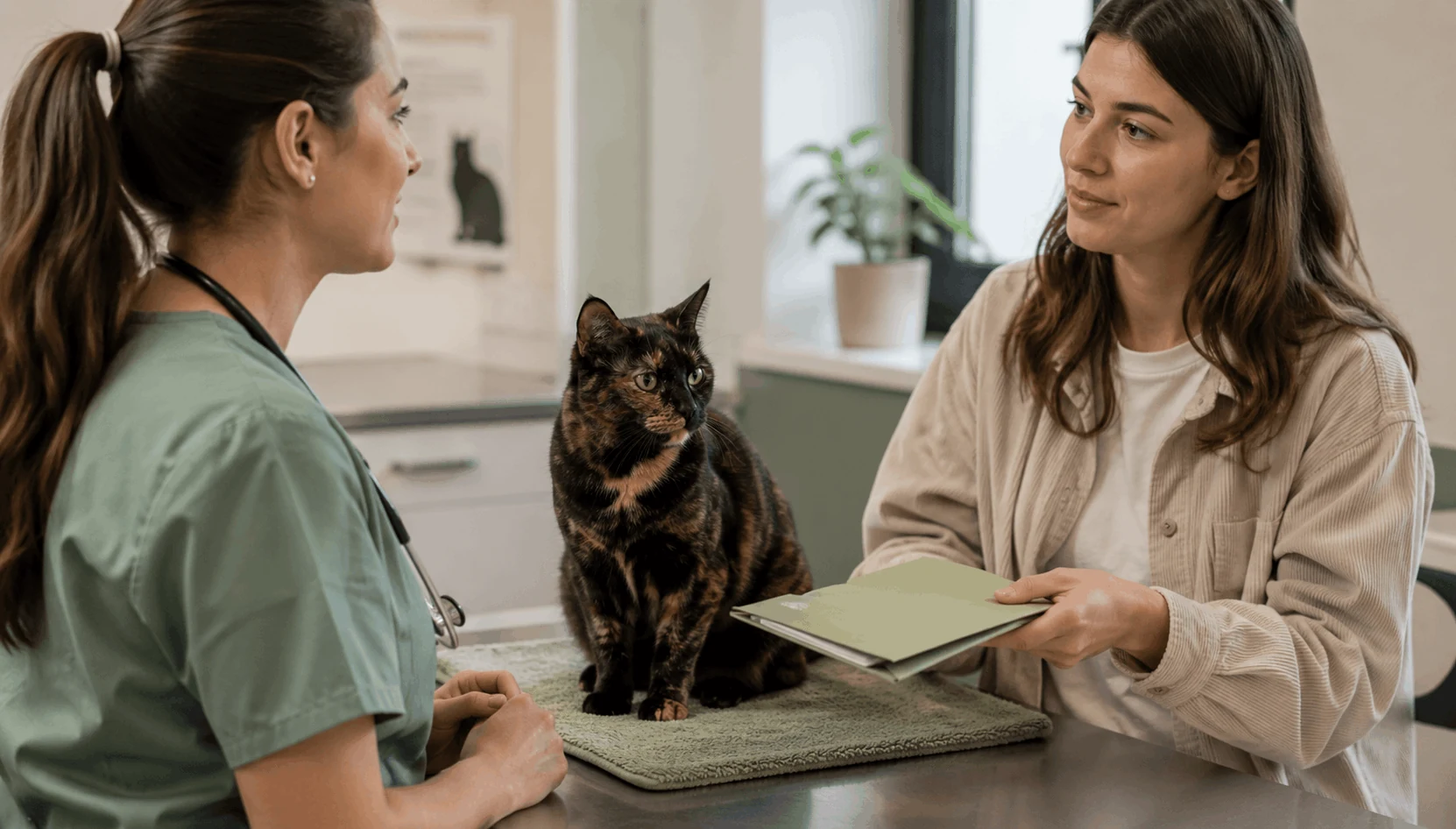
It does not always need to have been formally diagnosed. A note in your vet's records about weight loss or drinking more than usual can be enough, and an exclusion can extend to conditions the insurer considers medically related. That matters particularly for cats, because the early signs of kidney disease, hyperthyroidism and diabetes are easy to mention in passing at a routine appointment.
Age matters separately. Premiums generally rise as a cat gets older, many policies introduce a percentage contribution at a certain age, and some insurers will not start a new policy beyond an upper age limit at all. An older cat with no cover in place has fewer options than the same cat would have had at two.
There are two practical consequences. Cover started while there is nothing on record has fewer exclusions to work around than cover started later. And if you already hold a policy covering an ongoing condition, keeping it running without a break is often worth more than any saving from moving.
Answer every medical question accurately and in full. An incomplete answer can affect a future claim.