Yeti Compare

PET INSURANCE

HOW PET INSURANCEACTUALLY WORKS

Last reviewed 21 September 2026

What it covers, what it does not, how the four cover types differ, and what changes between policies that look the same on price. Understand it first, then compare.

Our quote service is coming soon. Participating providers and available cover will be confirmed before launch.

A wet Cockapoo being dried with a towel by its owner in a boot room

START HERE

WHAT PET INSURANCE IS, AND WHAT IT PAYS FOR

Pet insurance can help towards eligible costs if your pet becomes ill or is injured. You pay a premium for the policy, and if you make an eligible claim, what the insurer pays depends on the cover, the limits, the excess, the exclusions and the policy terms.

Vet fees are usually the main part of it, but policies can include other benefits too. What is included varies between policies, which is the reason two quotes at a similar price may not be offering the same thing.

Core benefit

Vet fees

Depending on the policy, this can cover the treatment and investigation an eligible illness or injury needs.

  • Eligible consultations and examinations
  • Diagnostic tests
  • Imaging, including X-rays, CT and MRI
  • Medication
  • Surgery
  • Hospitalisation
  • Specialist referral
  • Some complementary treatments
Varies by policy

Other benefits that can be included

These are not standard, and the limits attached to them vary.

  • Dental treatment
  • Complementary treatment such as physiotherapy or hydrotherapy
  • Behavioural treatment
  • Advertising costs and a reward if a pet goes missing
  • A payment if a pet dies from an eligible cause
  • Emergency boarding if you are admitted to hospital
  • Holiday cancellation
  • Emergency veterinary treatment while travelling abroad
  • Third-party liability, on some dog policies

Third-party liability in particular is worth checking rather than assuming, and it is not a feature of ordinary cat insurance.

This is general information, not a personal recommendation.

IMPORTANT EXCLUSIONS TO CHECK

WHAT PET INSURANCE USUALLY DOES NOT COVER

Conditions your pet already had

New policies generally do not cover an illness or injury your pet already had, or had shown signs of, before cover began. Definitions vary between insurers, and some products treat certain historical conditions differently. This is covered in more detail further down.

Routine and preventative care

Vaccinations, flea, worm and tick treatment, neutering, grooming and routine dental maintenance are commonly outside standard insurance.

Anything arising in a waiting period

Policies can exclude illness or injury that arises during an initial period after cover starts. The length varies by insurer and product, and can differ between accidents and illness.

Pregnancy and breeding

Pregnancy, birth and treatment of offspring are commonly excluded.

Policy-specific limits and restrictions

Policies can contain condition-specific limits, treatment-specific limits, eligibility restrictions and their own definitions of common terms.

The headline cover amount is not the whole policy

HOW COVER IS STRUCTURED

THE FOUR MAIN TYPES OF PET INSURANCE

UK pet insurance is generally grouped into four categories, and the same four are used in FCA reporting and in ABI consumer guidance. The category describes how an eligible condition is covered over time.

Lifetime

Provides a set amount of cover for eligible illnesses and injuries during each policy year. If you renew the policy, the available cover can reset for the new policy year, which means an eligible ongoing condition can continue to be covered subject to the policy's terms and limits.

Cover can reset at renewal

Maximum benefit

Provides a fixed amount of cover for each eligible illness or injury. There is usually no set time limit for using that amount, provided the policy remains in force. Once the maximum available for a condition has been used, further treatment for that condition is no longer covered under the policy.

A fixed amount per condition

Time limited

Provides cover for each eligible illness or injury up to both a financial limit and a set period of time. Policies commonly use a 12-month treatment period, although the exact period varies. Cover for that condition ends when either the time limit or financial limit is reached.

Cover limited by time and amount

Accident only

Designed mainly to cover eligible injuries caused by accidents. It does not provide the general illness cover included with accident-and-illness policies, although the exact benefits and limits vary between insurers.

Mainly for accidental injuries

These are the four main categories, but policies within the same category can still work differently. Lifetime and maximum benefit can both continue paying for a condition across more than one year; the difference is in the mechanism. Compare the limit, the excess, the exclusions and the individual benefits as well as the category. This is general information, not a personal recommendation.

A Chihuahua and a long-haired cat lying together in a patch of sunlight

THE PART THAT DECIDES THE PAYOUT

THE TWO NUMBERS THAT SHAPE WHAT YOU GET BACK

The vet fee limit

The maximum available towards eligible veterinary treatment under the relevant part of the policy.

The amount matters, and so does the way it applies. Depending on the policy it may apply across a policy year, to an individual condition, or to a condition within a specified treatment period.

Some policies also contain inner limits, so a particular treatment or condition can have a lower cap than the headline figure suggests. Dental, imaging, behavioural and complementary treatment commonly carry their own.

Compare the amount, and the way the amount applies.

Ways a limit can apply

  • Across a policy year
  • To an individual condition
  • To a condition within a treatment period
  • To a single treatment, as an inner limit

The excess, and any contribution

Most policies require you to contribute towards an eligible claim through an excess. Structures vary considerably, so four things are worth checking:

The fixed excess. How much is it?

When it applies. Per claim, per condition, or again in each policy year?

Whether a percentage applies too. Some policies add a percentage contribution, and some introduce one as a pet gets older.

How the percentage is calculated. Some apply it to the full bill, others to what is left after the excess. The difference can be significant on a large claim.

Two policies with the same £100 excess can work quite differently. So can two policies with the same headline limit.

READ THE DEFINITION

PRE-EXISTING CONDITIONS, AND WHEN COVER ACTUALLY STARTS

Pre-existing conditions

A condition does not necessarily need a formal diagnosis before an insurer treats it as pre-existing. What matters is usually whether signs or symptoms were present before cover began, and how the policy defines it.

The Financial Ombudsman Service, when it looks at disputes of this kind, considers the policy wording, the veterinary records, the information given to the insurer and the medical evidence. It also sees disputes about related and bilateral conditions, where an insurer treats a later problem as arising from the same underlying condition.

Definitions differ between insurers, and the market is not uniform. Some products will reconsider particular historical conditions after a defined period with no signs, symptoms, medication, treatment or veterinary advice. Others will not.


If your pet has any medical history, compare the insurer's definition and any exclusions applied specifically to your pet, rather than only whether the quote says previous conditions are considered.

A Cavalier King Charles Spaniel lying on a window seat on a rainy day

Waiting periods

Cover does not always start all at once. Many policies include an initial period during which particular claims are not covered, and the period can be different for accidents and for illness.

There is no universal figure. Anything arising during a waiting period is often treated in the same way as a condition that pre-dates the policy, which makes this worth checking rather than assuming.

Check when accident cover starts, when illness cover starts, and how anything arising in between would be treated.

This is general information, not a personal recommendation.

Pre-existing conditions explained

Our quote service is coming soon. Participating providers and available cover will be confirmed before launch.

WHAT MOVES A QUOTE

WHAT CAN AFFECT WHAT YOU PAY

Your pet

Age, breed, and aspects of medical or claims history can all affect pricing.

Where you live

Veterinary costs vary geographically, and location can influence premiums.

The policy

The cover type, the level of cover, the vet fee limit and the excess you choose all affect the price.

Wider treatment and claims costs

Veterinary and claims costs across the market feed into premiums independently of any individual pet.

£1.23bn

paid in pet insurance claims by ABI members, 2024

1.8m

claims notified to ABI members, 2024

£685

average claim cost, ABI, 2024

Association of British Insurers, 2024 pet insurance data, published May 2025. Figures relate to ABI members rather than the whole market.

The Office for National Statistics recorded 9.1% annual inflation in veterinary and other services for pets during 2024.

In March 2026 the Competition and Markets Authority concluded its investigation into veterinary services and set out a package of binding measures aimed at improving transparency and competition, including standard price lists, written estimates for treatment pathways over £500, itemised bills and a cap on prescription fees.

How much does pet insurance cost

A West Highland White Terrier on a set of vet scales as a vet nurse encourages it

WHAT HAPPENS IF YOU CLAIM

HOW A CLAIM USUALLY WORKS

If you claim for veterinary fees, the insurer will normally need information from both you and your vet.

Insurers commonly ask for:

  • Details of the illness or injury
  • When symptoms or treatment started
  • Your pet's veterinary medical history
  • Invoices for treatment
  • Information from any other vets involved

Some claims can be paid directly to the veterinary practice if you authorise it, though not every practice accepts payment from an insurer directly. Where that is not possible, you may need to settle the bill and claim it back.

If paying a bill is a problem right now, read help with vet bills.

Check the claims process before you need it, rather than at the point you do.

THREE DIFFERENT QUESTIONS

WHERE ARE YOU WITH PET INSURANCE?

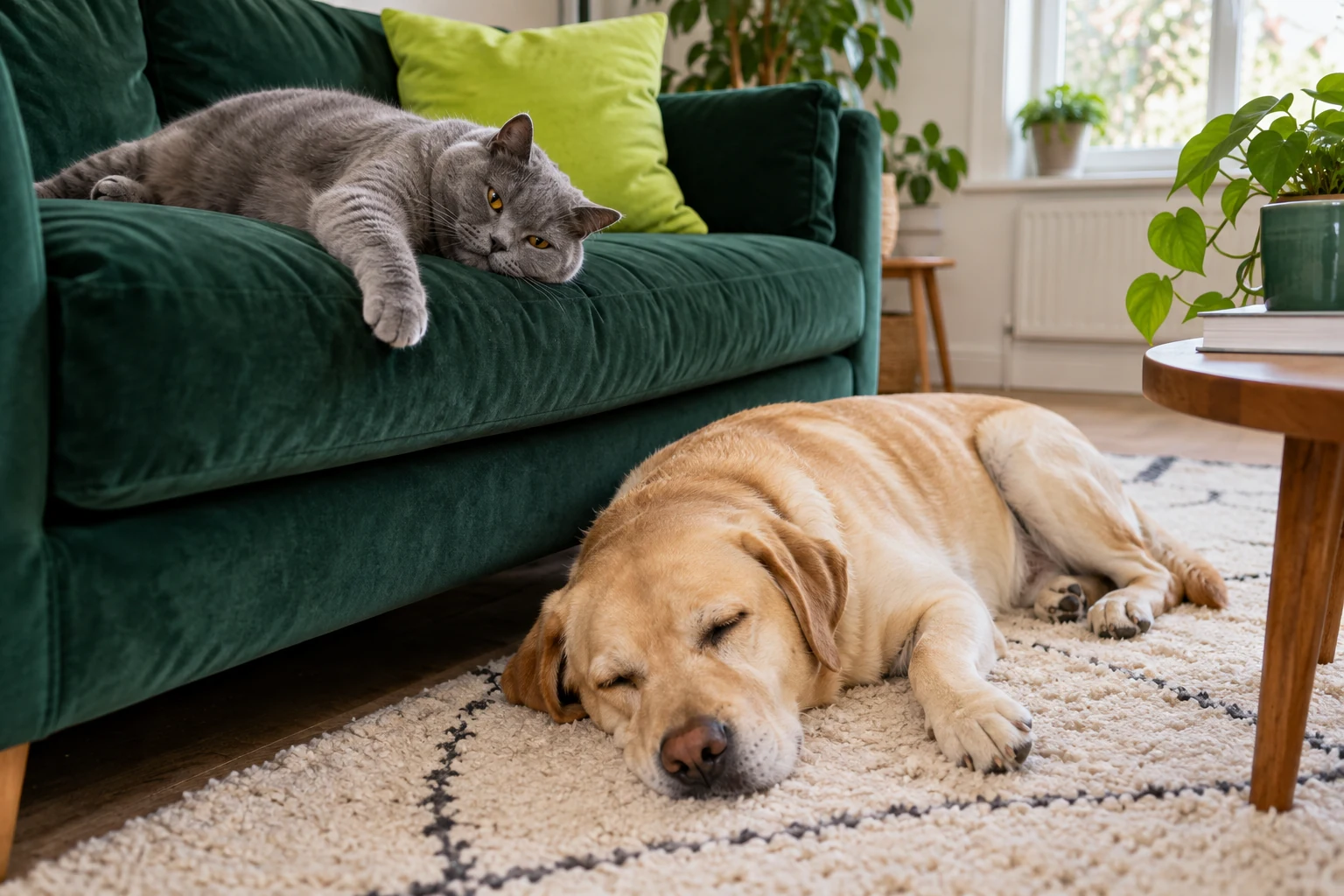
A grey British Shorthair cat on a sofa above a yellow Labrador asleep on the rug

Buying for the first time

What to check:

  • Eligibility and any entry age
  • Cover type
  • Vet fee limit and inner limits
  • Excess and any contribution
  • Waiting periods
  • Exclusions

My policy is renewing

A renewal is not only a new price. What to check:

  • The premium, against last year's
  • Any change to the vet fee limit
  • Any change to the excess, or a new percentage contribution
  • Any change to individual benefits
  • Any change to exclusions or the policy wording

These are three different decisions, and the same quote can be right for one and wrong for another. This is general information, not a personal recommendation.

A large black Newfoundland squeezed into a dog bed that is too small for it

GET READY

WHAT TO HAVE READY

Having this to hand makes the comparison quicker and the quotes more accurate.

  • Your pet's species, breed, and age or date of birth
  • Your address and postcode
  • Relevant medical and treatment history
  • Details of any existing cover, including the renewal date
  • The cover type and level you want to compare at
  • When you want cover to start

Answer every question accurately and in full. The Financial Ombudsman Service considers both the questions an insurer asked and the answers a customer gave when it looks at disputes, so an incomplete answer can affect a future claim.

COMMON QUESTIONS

PET INSURANCE QUESTIONS

Primarily eligible veterinary costs arising from illness or injury. Depending on the policy it can also include dental treatment, complementary treatment, lost or stolen pet benefits, emergency boarding and, on some dog policies, third-party liability. Limits and exclusions vary between policies.

Check the documents that apply to your quote

Before buying, check:

The IPID. A short standardised overview of the main cover, exclusions and obligations. It is a summary, and the complete contractual information sits in other documents.

The policy wording. The full contractual terms and definitions.

Your quote, schedule or certificate. The information specific to the cover offered to you.

Any endorsements or specific exclusions. These can change how the general wording applies to your pet.

Sources and review date

This page explains how pet insurance works across the UK market. Insurer terms change, so always check the current policy wording, the Insurance Product Information Document and your quote before buying.

Last reviewed 21 September 2026

Sources: Association of British Insurers, Financial Conduct Authority, Financial Ombudsman Service, Office for National Statistics, Competition and Markets Authority.

Compare on the cover, then on the price

Look at the cover type, the vet fee limit, the excess, the exclusions and the price side by side.

Our quote service is coming soon. Participating providers and available cover will be confirmed before launch.