


WINTER CARE
WINTER IS HARDERON OLDER PETS
Cold makes stiff joints stiffer, and most owners put the slowing down entirely down to age. Often it is pain, and pain can usually be managed.
Our quote service is not live yet while we onboard insurers. Book a demo to see how it will work.
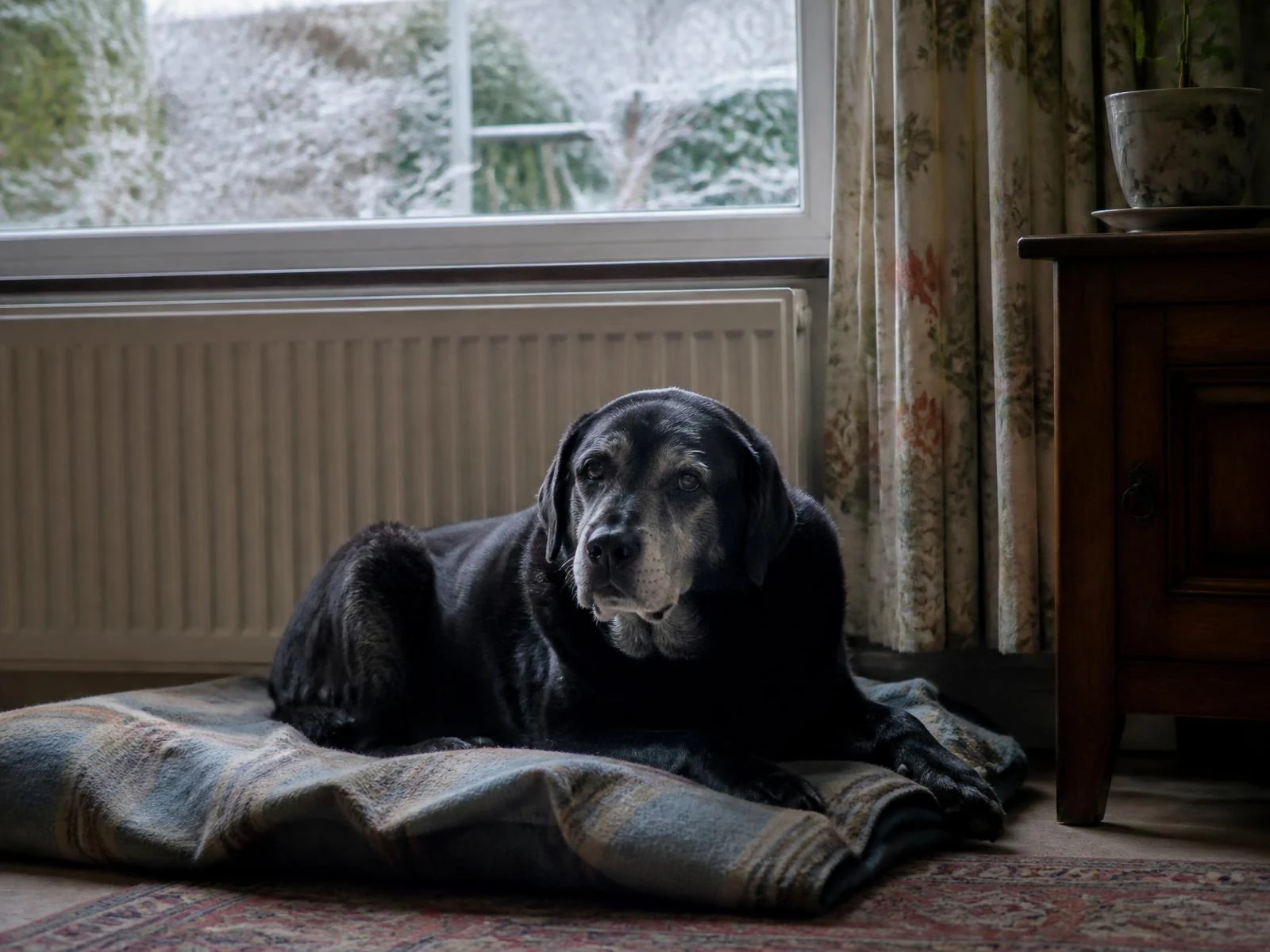
Cold and damp
make joint pain noticeably worse
Doing less
is the main sign, not limping
Lifetime cover
can reset the available cover at renewal
THEY DO NOT TELL YOU IT HURTS
Pets rarely limp dramatically. They just quietly do less, and it happens slowly enough that it looks like getting old rather than being in pain.
01
The signs are easy to miss
Reluctance on stairs, slower to get up, less interested in walks, sleeping more. In cats it shows as jumping up less, being less fussy about grooming, or choosing a different spot to sleep because the old one is now too high.
02
Cold makes it worse
Arthritis and joint disease are extremely common in older dogs and cats, and cold, damp weather tends to sharpen the pain noticeably. A pet that seemed fine in September can look much older by January.
If they have slowed down this winter, it is worth a vet visit rather than an assumption
03
Winter weight creeps on
Shorter walks and more time indoors mean weight goes on quietly, and every extra kilo goes straight through already sore joints. It is the one factor entirely within your control.
SMALL CHANGES THAT HELP
A thicker bed, away from draughts
Rugs on slippery floors
A step up to their favourite spot
HOW TO MAKE WINTER EASIER
None of this is dramatic, and all of it makes a genuine difference.
- Warm and off the floor. A thicker bed away from draughts helps far more than people expect.
- Shorter and more often. Two gentle walks beat one long one for a stiff dog.
- Grip underfoot. Rugs or runners on hard floors stop the slipping that makes joints worse.
- Keep the weight down. Adjust food if walks have got shorter, rather than letting it creep.
- Make things reachable. For older cats, a step to a favourite perch and a litter tray with a low side.
- Dry them off. Damp fur after a wet walk makes an achy dog colder for longer.
- Get the pain looked at. Joint pain is manageable, and managing it early tends to work considerably better.
THE COVER QUESTION
WOULD YOUR POLICY ACTUALLY COVER IT?
This is where cover type matters more than anywhere else. Arthritis is an ongoing condition rather than a one-off, so it needs treating for the rest of your pet's life. Lifetime cover can reset the available cover at each renewal, subject to the policy terms. Time-limited cover applies a time limit, commonly 12 months, as well as a financial limit, and maximum-benefit cover gives a fixed amount per eligible condition, which for a condition lasting years is a meaningful difference. Two other things worth knowing. Earlier symptoms, advice or treatment may affect cover under the insurer's pre-existing-condition rules. Answer the questions asked accurately and check the terms, since this is why joint problems so often turn out to be uncovered in older pets. Some policies also add a percentage contribution on top of the excess once a pet reaches a certain age. The age threshold and how it applies vary between insurers.
COMMON QUESTIONS
COVER THAT LASTS AS LONG AS THEY DO
Explore how pet insurance works and what to check for cover on ongoing conditions.
General information only, not veterinary advice. Guidance drawn from published UK sources including the RSPCA and PDSA. If you are worried about your pet, contact your vet straight away.