Yeti Compare

RESCUE DOG INSURANCE

RESCUE DOG INSURANCE,EXPLAINED AFTER ADOPTION

Last reviewed 14 August 2026

Your rescue dog may already have temporary cover, a medical record from the rehoming organisation, and age rules to consider. Here is what to check before you continue that cover or compare something else.

When our quote service launches, it will compare policies from the providers on our panel. No comparison service covers the whole market.

A fawn lurcher leaning in towards its owner, who is reading in a green armchair at home

START HERE

CHECK WHAT INSURANCE CAME HOME WITH THEM

Several major UK rehoming organisations arrange temporary pet insurance for a dog going to a new home, commonly for around four weeks. Not all of them do, and the arrangements differ.

Before you do anything else, find the adoption paperwork and check whether cover already exists.

Who the insurer is

The rehoming organisation introduces the policy, but an insurer provides the actual cover. You need to know which.

The exact expiry date

Not an approximate number of weeks. A date.

What it covers

Temporary cover is usually narrower than an annual policy. Check the limits, the excess and the exclusions.

Whether it ends automatically

Some temporary cover simply expires. It does not always turn into a paid policy on its own.

Whether anything has been treated under it

If your dog has seen a vet during the temporary cover, that matters for what comes next.

If no paperwork came with your dog, ask the rehoming organisation before assuming there is no cover.

This is general information, not a personal recommendation.

THE HANDOVER

WHAT HAPPENS WHEN THE TEMPORARY COVER ENDS

This is the decision that matters, and there are two routes through it. Which one suits depends on what the scheme allows and what you find when you compare.

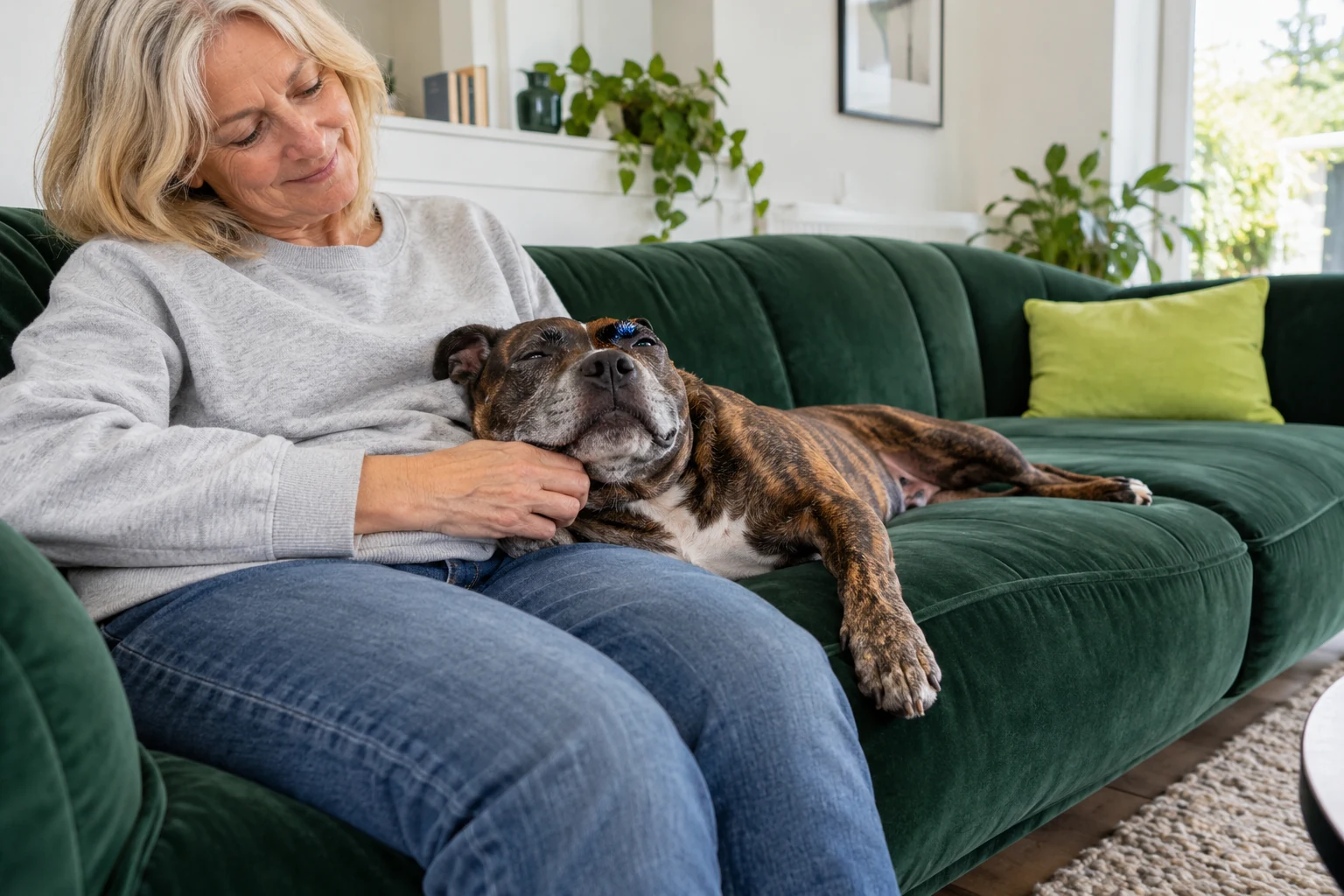
A brindle Staffordshire Bull Terrier lying across its owner's lap on a green sofa

Route one, continue with the same insurer

Some temporary schemes have their own continuation arrangements. Where they exist, arranging a full policy with the same insurer before the temporary cover expires can mean cover runs continuously, which can preserve eligibility for conditions already known and avoid a fresh waiting period for illness.

Not every scheme works this way. The terms are in the temporary policy documentation, and they are worth reading before the expiry date rather than after it.

Route two, arrange cover with a different insurer

A completely new policy from a different insurer normally starts from scratch. That usually means its own waiting periods, and its own assessment of anything already in your dog's record.

That is not a reason to rule it out. It is a reason to compare what the new policy would exclude alongside what it would cost.

Do not deliberately overlap two policies

You may see the suggestion that you should start a new policy a couple of weeks before the temporary cover ends, so that any waiting period has passed by the time it expires.

Do not do this without checking with both insurers first.

Where the same animal is insured under two policies at once, questions can arise about which insurer responds to a claim and how any liability is shared. Some insurers specifically warn against holding overlapping pet cover.

If you are considering a different insurer, check the temporary policy's expiry date and the new policy's waiting periods, and speak to both insurers before arranging anything that would run in parallel.

There is no standard timetable here. Read the temporary policy, then decide.

INCOMPLETE RECORDS

WHAT IF YOU DO NOT KNOW THEIR FULL HISTORY?

A rescue dog's history can be complete, partial or largely unknown. A dog rehomed by a family with full veterinary records is in a different position from a stray.

What matters for insurance is not what happened before the rescue. It is the information available about the dog now, and the questions the insurer asks.

Most rehoming organisations health-check dogs before rehoming, and many vaccinate, microchip and treat while the dog is in their care. That creates a record, and it usually comes to you with the adoption paperwork.

Answer the insurer's questions accurately, using the information you have. If something is genuinely unknown, follow the insurer's or the comparison journey's instructions for unknown information rather than guessing.

Not knowing your dog's whole life story is normal and it is not a barrier to getting a quote.

Information a rehoming organisation may give you

  • Age or estimated age
  • Breed or type, or a best description
  • Vaccinations given
  • Microchip details
  • Neutering status
  • Previous injuries or illnesses identified
  • Medication given
  • Veterinary treatment carried out
  • Conditions noted during the rescue's own assessment

THE CONSEQUENCE

WHAT A NEW POLICY WOULD LIKELY EXCLUDE

A new insurer may treat an illness or injury as pre-existing where the condition itself, or relevant signs or symptoms, existed before the policy began. Definitions vary between policies.

For a rescue dog this works differently from how people expect. A condition identified during the rehoming organisation's veterinary assessment can be relevant even though you were not there and never saw a symptom yourself. What is in the record is what counts.

That is also why the temporary cover matters. Anything treated under it is on the record when a new insurer looks.

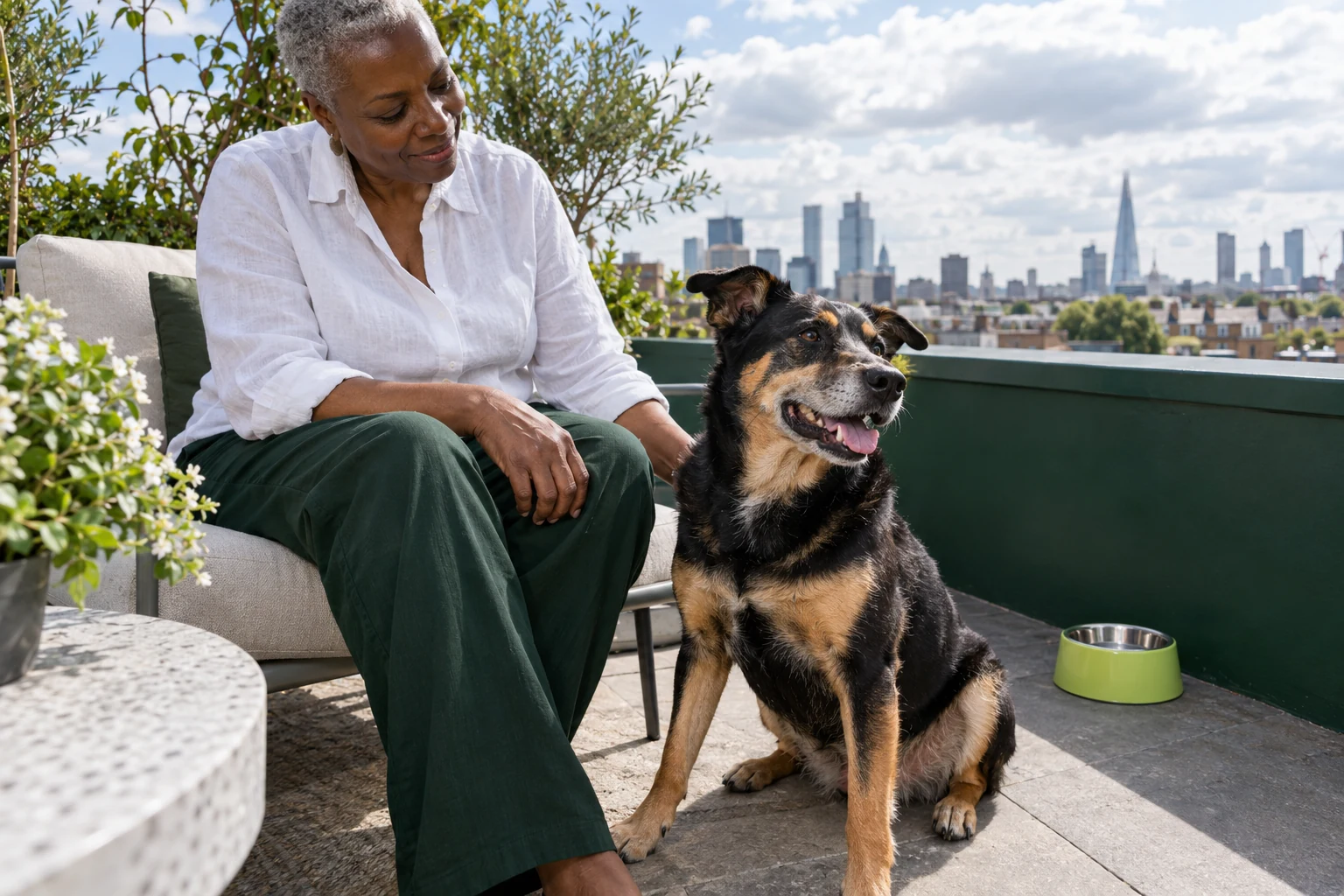
A black and tan crossbreed dog sitting beside its owner on a roof terrace

Known conditions

What does the rescue paperwork actually say?

Symptoms and investigations

Are there notes about signs that were looked into, even without a diagnosis?

Medication and treatment

Was anything prescribed or carried out?

Specific exclusions

Has the insurer applied any exclusions to this particular dog on the quote?

Historical condition rules

Some products reconsider certain past conditions after a defined period with no symptoms, treatment, medication or advice. Others do not.

Conditions that arise after cover starts may be eligible, subject to the policy's waiting periods, exclusions, limits and definitions. Do not assume everything after the start date is automatically covered.

Compare the exclusions as carefully as the premium.

This is general information, not a personal recommendation.

Pre-existing conditions explained

WHAT YOU ARE BUYING

WHAT DOG INSURANCE CAN COVER

Vet fees

The core benefit. Depending on the policy, this can include eligible consultations, diagnostic tests, scans, medication, surgery, hospitalisation and specialist referral.

What can also be included

Depending on the policy:

Third-party liability, if your dog injures someone or damages property
Complementary treatment
Behavioural treatment
Advertising costs and a reward if your dog is lost or stolen
Emergency boarding
Holiday cancellation
Emergency veterinary treatment while travelling abroad

These vary between policies and none of them is standard. Third-party liability in particular is worth checking rather than assuming, along with the limit that applies.

What usually sits outside

Routine and preventative care is normally excluded, including vaccinations, flea and worm treatment, neutering, grooming and routine dental care. Many of these will already have been done by the rehoming organisation.

Compare the cover, the limits and the exclusions rather than assuming rescue dog insurance includes a particular set of benefits.

Vet fee limits explained

NO SPECIAL PRODUCT

RESCUE DOG INSURANCE IS ORDINARY DOG INSURANCE

There is no fifth category of pet insurance for rescued dogs. Rescue dog insurance describes ordinary dog insurance arranged for a rehomed dog, and the same four structures apply.

Lifetime

Provides a set amount of cover for eligible illnesses and injuries during each policy year. If you renew the policy, the available cover can reset for the new policy year, which means an eligible ongoing condition can continue to be covered subject to the policy's terms and limits.

Cover can reset at renewal

Maximum benefit

Provides a fixed amount of cover for each eligible illness or injury. There is usually no set time limit for using that amount, provided the policy remains in force. Once the maximum available for a condition has been used, further treatment for that condition is no longer covered under the policy.

A fixed amount per condition

Time limited

Provides cover for each eligible illness or injury up to both a financial limit and a set period of time. Policies commonly use a 12-month treatment period, although the exact period varies. Cover for that condition ends when either the time limit or financial limit is reached.

Cover limited by time and amount

Accident only

Designed mainly to cover eligible injuries caused by accidents. It does not provide the general illness cover included with accident-and-illness policies, although the exact benefits and limits vary between insurers.

Mainly for accidental injuries

Policies within the same category still have different limits, excesses and exclusions. Compare those alongside the category.

This is general information, not a personal recommendation.

Types of pet insurance

Book a demo

When our quote service launches, it will compare policies from the providers on our panel. No comparison service covers the whole market.

A rescue dog stepping over a low pole during a physiotherapy session

AGE ELIGIBILITY

DOES AGE MATTER FOR A RESCUE DOG?

It can, and the rules are less fixed than people assume.

Some products set a maximum age for starting new cover. Others have no upper entry age at all. The rules vary by insurer, by product, and sometimes by breed, so a dog turned down by one insurer may be eligible with another.

Some rescue schemes also have their own arrangements. Where a temporary policy is continued correctly with the same insurer, a rehomed dog can sometimes access products beyond that insurer's usual new-business age limits. That is scheme-specific and worth checking in the temporary policy documentation.

Two separate rules

Starting cover

Whether this product will take your dog on at their current age.

Continuing cover

What happens at renewal once a policy is already running.

The question is not whether your dog is too old. It is which policies they are eligible to start

Older pet insurance explained

WHAT MOVES A QUOTE

WHAT CAN AFFECT WHAT YOU PAY

There is no reliable basis for saying that adoption status itself makes insurance more or less expensive. What insurers do use includes:

Age or estimated age

One of the more significant factors.

Breed or type

Claims experience differs between breeds.

Health and treatment history

Including anything recorded by the rehoming organisation.

Where you live

Veterinary charges vary geographically.

The policy

Cover type, level of cover, vet fee limit and excess.

Wider costs

Claims costs and veterinary costs across the market.

For an individual rescue dog, the only reliable answer is to compare actual quotes and cover rather than to assume adoption status changes the price in either direction.

Dog insurance explained

GET READY

HAVE THE ADOPTION PAPERWORK TO HAND

Most of what you will be asked for is in the pack the rehoming organisation gave you.

  • Your dog's age or estimated date of birth
  • Breed or type, using the rescue's description
  • Sex, and whether they are neutered
  • Your postcode
  • Microchip details
  • Vaccinations given
  • Known veterinary history, including anything treated during the rescue's care
  • Any medication
  • Details of any temporary insurance, including who provides it and its exact expiry date

If the exact breed is unknown

Use the breed or type information the rehoming organisation gave you. If it is genuinely unknown, follow the insurer's or comparison journey's instructions for mixed or unknown breeds.

Breed can affect pricing, so do not guess at a pedigree to make a quote form work.

Answer every question accurately, using the information available to you. Take reasonable care not to leave out something you do know. Inaccurate or incomplete information can affect how an insurer handles the policy or a future claim.

COMMON QUESTIONS

WHAT ADOPTERS ASK

Yes, subject to the insurer's eligibility rules and your dog's circumstances. Rescue dog insurance is ordinary dog insurance arranged for a rehomed dog rather than a separate product type.

This is general information, not a personal recommendation.

About this guide

This guide explains how insurance works for a rehomed dog across the UK market. Rehoming schemes, insurer terms and age rules change, so always check your adoption paperwork, the temporary policy documentation and the policy wording before deciding.

Last reviewed 14 August 2026

Sources: Association of British Insurers, Financial Conduct Authority, Financial Ombudsman Service.

Compare on the cover, then on the price

Compare the cover type, the vet fee limit, the excess, the exclusions and the price, including how each policy would treat what is already in your dog's record.

When our quote service launches, it will compare policies from the providers on our panel. No comparison service covers the whole market.