Yeti Compare

STAFFORDSHIRE BULL TERRIER BREED GUIDE

STAFFORDSHIRE BULL TERRIER: HEALTH EVIDENCE AND WHAT IT MEANS FOR COVER

Our quote service is not live yet while we onboard insurers. Book a demo to see how it will work.

A UK VetCompass study of 1,304 Staffordshire Bull Terriers found no evidence that the breed has higher overall health problems than other dogs, and no higher odds of aggression. Where predispositions were found, they sit mainly in the skin. [1]

A breed predisposition does not mean your dog will develop the condition, and it does not tell you whether treatment would be covered.

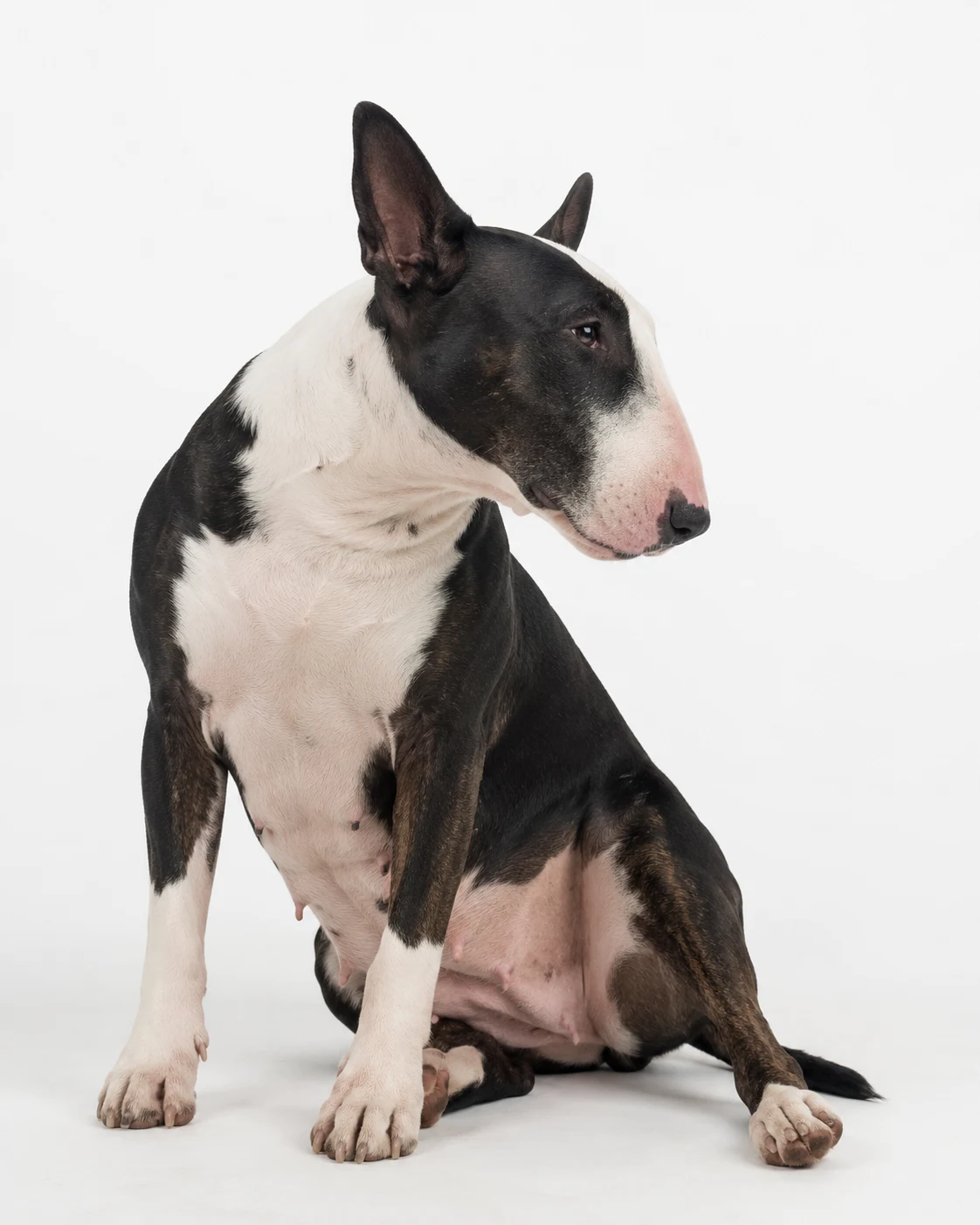
A brindle and white Staffordshire Bull Terrier standing side on, facing the camera

THE EVIDENCE IN BRIEF

THE STAFFORDSHIRE BULL TERRIER

This guide sets out the recognised health evidence for the Staffordshire Bull Terrier from UK veterinary and breed health sources, and explains which policy terms are worth reading closely as a result. Individual dogs vary, and a recognised predisposition does not mean an individual will be affected.

Evidence summary

Evidence strength
Strong UK primary care evidence, 2016 study year
Main themes
Atopic dermatitis, skin masses, documented protections
Policy focus
Dermatology, diagnostics, chronic medication, dental
Reported longevity
Median 10.7 to 12.8 years

Figures are quoted with the study, sample and period they come from. Annual prevalence is not lifetime risk, and odds ratios are not probabilities.

READ THIS FIRST

WHAT THE EVIDENCE ACTUALLY SAYS ABOUT THIS BREED

In a UK VetCompass study comparing 1,304 Staffordshire Bull Terriers with 21,029 other dogs during 2016, the odds of being diagnosed with at least one disorder did not differ significantly between the two groups (odds ratio 0.90; 95% confidence interval 0.80 to 1.02; p = 0.102). The authors concluded there is no evidence that Staffordshire Bull Terriers have higher overall health problems than other dogs. [1]

The same study specifically tested the hypothesis that the breed would show higher odds of aggression. It did not find that. There was no significant difference compared with other dogs (odds ratio 1.09; 95% confidence interval 0.75 to 1.58; p = 0.644). [1]

For context, the same research programme reported English Bulldogs predisposed to 55.8% of the specific disorders examined and French Bulldogs to 46.5%. Staffordshire Bull Terriers showed predispositions for 11.1%. The Staffordshire Bull Terrier is not a breed subject to legal restriction in the UK.

We set this out plainly because the breed is common in UK rehoming centres and is reported to be harder to rehome because of perceived behavioural problems that this research did not find.

RECOGNISED HEALTH CONSIDERATIONS

WHAT THE UK EVIDENCE SHOWS

The figures below come from a UK primary care VetCompass study of 1,304 Staffordshire Bull Terriers during 2016. They describe how often a condition was recorded in a study year, which is not the same as lifetime risk, and odds ratios are not probabilities. The authors describe their findings as exploratory rather than confirmatory, and ask readers to weigh confidence intervals and prevalence alongside the odds ratios. [1]

Atopic dermatitis

Allergy related skin inflammation that can cause itching, redness and recurrent infections. Odds ratio 1.88 (95% confidence interval 1.24 to 2.84) compared with dogs that are not Staffordshire Bull Terriers, with annual prevalence of 1.99%. The authors note this is the predisposition they hold greatest confidence in, because it was identified at the most precise diagnostic level. [1]

Skin masses

Lumps in or under the skin, which may need investigation to establish what they are. Odds ratio 1.80 (95% confidence interval 1.43 to 2.45), annual prevalence 3.76%. At grouped level, masses generally had an odds ratio of 1.51 and prevalence of 8.05%. [1]

Seizure disorder

Episodes of abnormal electrical activity in the brain. Odds ratio 2.06 (95% confidence interval 1.24 to 3.40), annual prevalence 1.38%. This one needs the study's own caution: only 18 cases were recorded, the authors note that the small number may inflate the odds ratio, and they suggest the finding may partly reflect diagnostic differences between breeds rather than a true predisposition. [1]

Stiffness

A clinical sign rather than a diagnosis. Odds ratio 1.76 (95% confidence interval 1.02 to 3.05), annual prevalence 1.15%. The authors caution that no predisposition was found for lameness, osteoarthritis or musculoskeletal disorders generally, and suggest the finding may reflect differences in the language vets use for different breeds. They also note the breed's documented stoicism. [1]

Obesity

Recorded at 6.0% in Staffordshire Bull Terriers compared with 3.9% in crossbred dogs. It is the one common disorder where prevalence was higher than in crossbreeds. Weight management is husbandry rather than insured treatment. [1]

This is general breed information rather than a diagnosis. Speak to a vet about symptoms or concerns affecting an individual dog.

POLICY TERMS THAT MATTER

WHAT THIS MEANS FOR PET INSURANCE

A breed predisposition does not mean your dog will develop a condition, and it does not tell you whether treatment would be covered. Cover depends on the individual policy, its exclusions and limits, when signs or symptoms first appeared, and your pet's medical history.

These are the terms worth reading closely if you are arranging or comparing cover for a Staffordshire Bull Terrier. Wording varies between providers, so check the policy documents rather than assuming any of them applies.

Long term dermatology and prescription medication

Atopic dermatitis is the predisposition the study authors hold most confidence in, and it is managed over years rather than resolved. Check whether long term medication, diagnostics and dermatology referral continue to be covered.

Recurring and related condition definitions

Skin conditions flare and return. How a policy defines a recurring or related condition decides whether the next flare is treated as the same claim or a new one.

Diagnostics, biopsy and mass investigation

Skin masses were recorded in 3.76% of dogs in the study year, and investigation usually means imaging or biopsy before anyone knows what is being treated.

Chronic medication and renewal continuation

Where a seizure disorder is diagnosed, medication is usually long term. Check whether treatment continues at renewal and how limits apply across policy years.

Specialist referral

Dermatology, oncology and neurology all normally involve referral, so check referral cover and any separate limit that applies to it.

Pre-existing skin, mass or lameness signs

Earlier notes of itching, a lump or stiffness may be relevant to an insurer's assessment, depending on the definition the policy uses.

Dental illness wording

The breed had lower odds of dental disease than other dogs, but prevalence is still meaningful at 7.82% for dental disorders. Lower odds is not the same as low prevalence, so the dental section is still worth reading.

For what hereditary, congenital, pre-existing, related and bilateral actually mean, see our guide to how breed affects pet insurance.

Health screening tells you what breeders monitor. A genetic test result alone does not establish whether a future condition will be covered. Answer the insurer's health questions accurately and check how its terms apply. This is general information, not a personal recommendation.

BREEDING HEALTH INFORMATION

HEALTH SCREENING

The Kennel Club identifies three inheritable conditions in the breed: hereditary cataracts (HC-HSF4), L-2-hydroxyglutaric aciduria (L-2HGA) and persistent hyperplastic primary vitreous (PHPV). Eye testing and DNA tests for HC-HSF4 and L-2HGA are mandatory for Kennel Club Assured Breeders, and eye screening for PHPV is recommended for all puppies. The VetCompass study did not identify these conditions in sufficient numbers to include, which may reflect genuine rarity. [2]

Screening availability is breeding health information. It is not evidence that a condition is common, and no screening result guarantees insurance cover.

THE OTHER HALF OF THE PICTURE

WHAT THE BREED IS PROTECTED AGAINST

The same study found conditions for which Staffordshire Bull Terriers had reduced odds compared with other dogs. This is rarely reported, and it belongs on the page alongside the predispositions. [1]

  • Patellar luxation, odds ratio 0.15 (95% confidence interval 0.04 to 0.61)
  • Retained deciduous tooth, odds ratio 0.19
  • Heart murmur, odds ratio 0.33, and heart disease at grouped level, odds ratio 0.33
  • Periodontal disease, odds ratio 0.41, and dental disorders at grouped level, odds ratio 0.45
  • Anal sac impaction, odds ratio 0.53

One nuance worth keeping: despite being protected relative to other breeds, dental disease is still common in absolute terms, recorded at 7.82% for dental disorders and 6.52% for periodontal disease in the study year. Lower odds is not the same as low prevalence.

COMMON QUESTIONS

FREQUENTLY ASKED QUESTIONS

The UK evidence says no. A VetCompass study of 1,304 Staffordshire Bull Terriers and 21,029 other dogs during 2016 found no significant difference in the odds of being diagnosed with at least one disorder (odds ratio 0.90; 95% confidence interval 0.80 to 1.02).

EDITORIAL STANDARDS

HOW WE CHECK THIS GUIDE

Health content is written from UK veterinary research and official breed health sources, and every figure keeps the study, sample and period it came from. Insurance content explains policy terms only: it does not recommend a cover type, quote a price or make any claim about eligibility.

Content type
Breed health and insurance terms guide
Scope
General information, not a personal recommendation
Ownership content
Temperament, exercise, grooming and buying guidance are being written separately

Cover can vary by provider. Final prices may change on the provider website, and you should check the policy documents before buying.

Sources

KEEP READING

OTHER BREED GUIDES

Researching more than one breed? These guides follow the same format, so you can compare temperament, health and day to day needs side by side.

WHEN YOU ARE READY

SEE HOW OUR QUOTE SERVICE WILL WORK

Our quote service is not live yet while we onboard insurers. Book a demo to see how it will work.