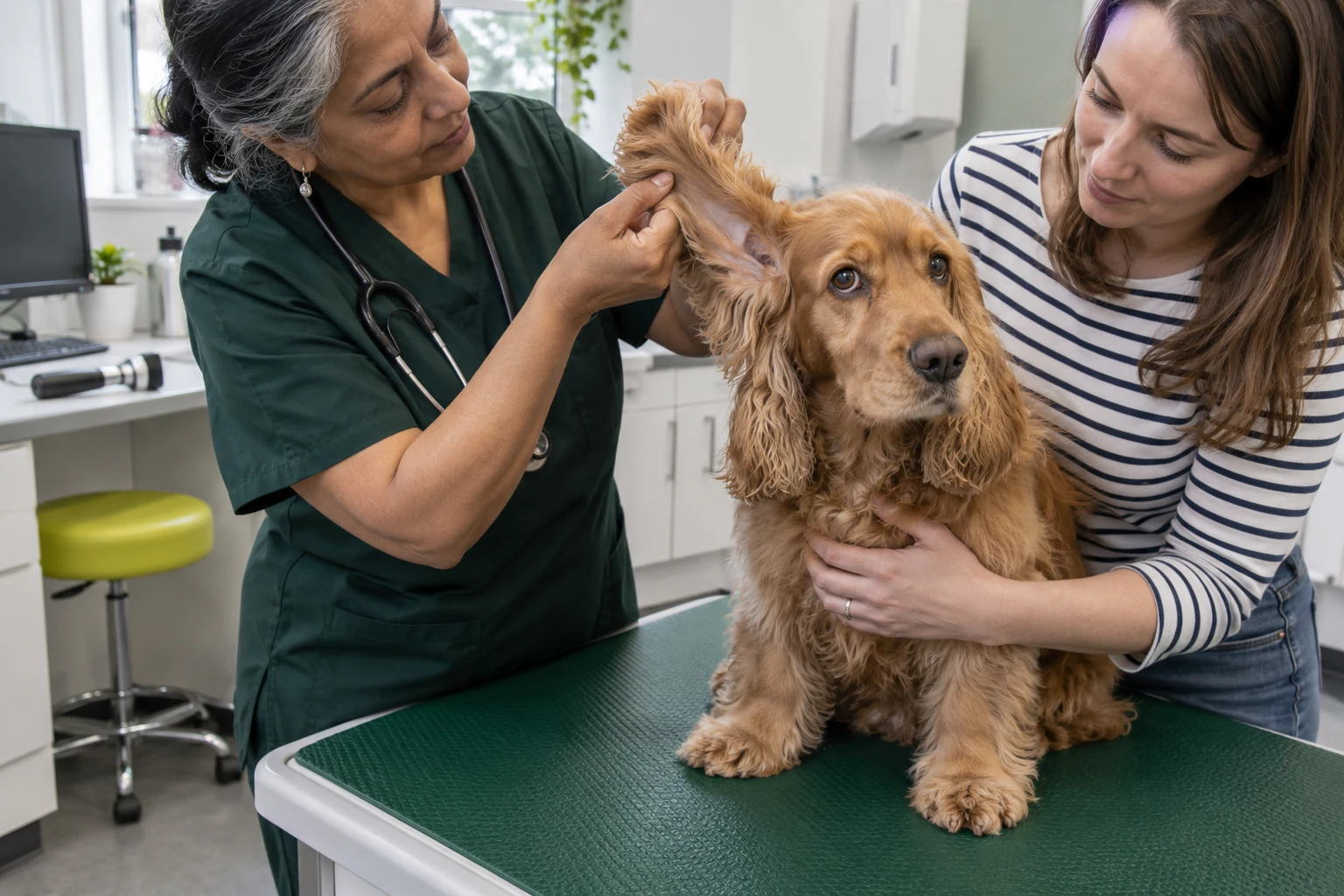
External ear inflammation, or otitis externa, had a recorded one-year prevalence of 10.09% in a UK Cocker Spaniel study, and a later comparison found increased odds of ear discharge, general ear disorders and otitis relative to non-Cocker dogs. Long, pendulous and well-haired ears retain heat, moisture and debris, and a dog running through vegetation is exposed to grass awns. Owners may notice head shaking, scratching, redness, odour, wax or discharge, sensitivity when the ear is touched, or a head tilt. Do not repeatedly apply shop-bought cleaners to a painful, inflamed or obstructed ear without veterinary advice. Check ears visually after every countryside walk, keep the coat around the opening manageable, dry the pinnae after water exposure and seek early treatment. Routine deep plucking of normal ear canals is not automatically necessary and should be agreed with the vet and groomer. [5] [6]
Periodontal disease was the most frequent specific diagnosis in the UK prevalence study, affecting 20.97% during the study year. A later comparative study reported approximately 20.12% and increased odds relative to non-Cocker dogs, noting that prevalence was probably underestimated because complete periodontal assessment generally requires examination and dental radiography under anaesthesia. Warning signs include bad breath, red or bleeding gums, visible tartar, dropping food, chewing on one side, facial swelling and reluctance to have the mouth touched. Daily brushing with dog toothpaste is the most useful home measure: reward brief lip lifts, then contact with a finger or soft cloth, before introducing a toothbrush. Dental chews may supplement but do not replace brushing, and their calories count. [6] [16]
Obesity had a recorded prevalence of 9.88% in the UK study. Excess body fat can be obscured by the coat, so assess the dog by touch as well as sight. At an appropriate body condition the ribs should be easy to feel under a light covering, a waist should be visible from above and the abdomen should tuck upwards behind the ribcage. Weigh food, allocate training rewards from the daily ration and record weight monthly. Unexpected gain may reflect overfeeding, reduced activity or occasionally disease, and unexplained loss, especially with thirst, poor appetite or muscle wasting, needs veterinary investigation. Avoid arbitrary feeding reductions found online. [5] [16]
Anal-sac impaction occurred in 8.07% of dogs in the UK prevalence study. Signs include scooting, sudden attention to the rear, licking, discomfort when sitting, swelling beside the anus or a strong fishy odour. These signs can also arise from skin disease, parasites or gastrointestinal upset, so repeated home expression without diagnosis is inappropriate. Pain, swelling, blood, pus or systemic illness warrants prompt veterinary assessment. [5]
UK comparative research identified increased odds of several eye presentations, including dry eye or keratoconjunctivitis sicca, ocular discharge, cataract and conjunctivitis. Cataract prevalence in the primary-care dataset was 1.20%, compared with 0.68% in non-Cocker dogs, while referral-based studies have produced substantially higher figures because referral populations are selected for more complex disease. Seek veterinary examination for persistent discharge, redness, rubbing, squinting, cloudiness, light sensitivity, altered vision or collisions with objects. A suddenly painful, red or cloudy eye, or sudden visual loss, is an emergency. [6]
prcd-PRA causes progressive retinal degeneration. Night blindness is commonly noticed first, potentially progressing to total blindness. The Royal Kennel Club describes onset from around three years or later and records autosomal-recessive inheritance. Primary angle-closure glaucoma risk is assessed by gonioscopy, which grades the eye's drainage angle. Screening informs breeding risk but cannot guarantee that glaucoma will or will not occur. [10] [13]
Adult-onset neuropathy is an autosomal-recessive neurological disorder described as unique to Cocker Spaniels. Signs usually begin between approximately seven and a half and nine years, with hindlimb weakness, unsteadiness and incoordination, progressing gradually over several years to the forelimbs and occasionally swallowing difficulty. A DNA test is available for breeding decisions. [11]
Acral mutilation syndrome causes reduced pain sensation in the extremities and self-trauma. Signs typically appear from three to twelve months and include persistent licking or chewing of paws, ulceration, bleeding and, in severe cases, loss of claws or digits. It is autosomal recessive and is now one of the Royal Kennel Club's minimum DNA-test recommendations for the breed. [9] [2]
Familial nephropathy is an inherited defect of the kidney's filtration structure. Affected dogs commonly develop renal failure between approximately six months and two years. Possible signs include excessive drinking and urination, reduced growth, weight loss, poor coat, reduced appetite and vomiting. It is progressive and serious, but DNA-informed mating can prevent the production of genetically affected puppies. [12]
Hip dysplasia is a complex developmental disorder influenced by multiple genes and environmental factors. Signs can include stiffness, difficulty rising, exercise reluctance, altered gait, pain or lameness. Although recent UK comparative data did not show the breed to have higher odds of hip dysplasia than other dogs, the Royal Kennel Club still includes BVA and Kennel Club hip screening in its Best Practice recommendations. A screening recommendation is not proof that a condition is highly prevalent. [6] [14]