Yeti Compare

GERMAN SHEPHERD DOG BREED GUIDE

LIVING WITH A GERMAN SHEPHERD: WHAT OWNERS SHOULD KNOW

Our quote service is not live yet while we onboard insurers. Book a demo to see how it will work.

The German Shepherd Dog is a large, athletic pastoral breed developed for versatile work. A well-bred, well-socialised individual can be attentive, responsive and strongly engaged with its household, but this is not a low-effort dog. Most healthy adults need more than two hours of exercise a day alongside training, scent work, problem-solving and regular companionship. Their size, strength, alertness and potential guarding behaviour are often underestimated by prospective owners. [1][2][10]

A German Shepherd may suit an active, organised household that wants to train and work with its dog every day. It is less likely to suit someone looking for a quiet, low-maintenance dog or a companion that can routinely be left for long periods.

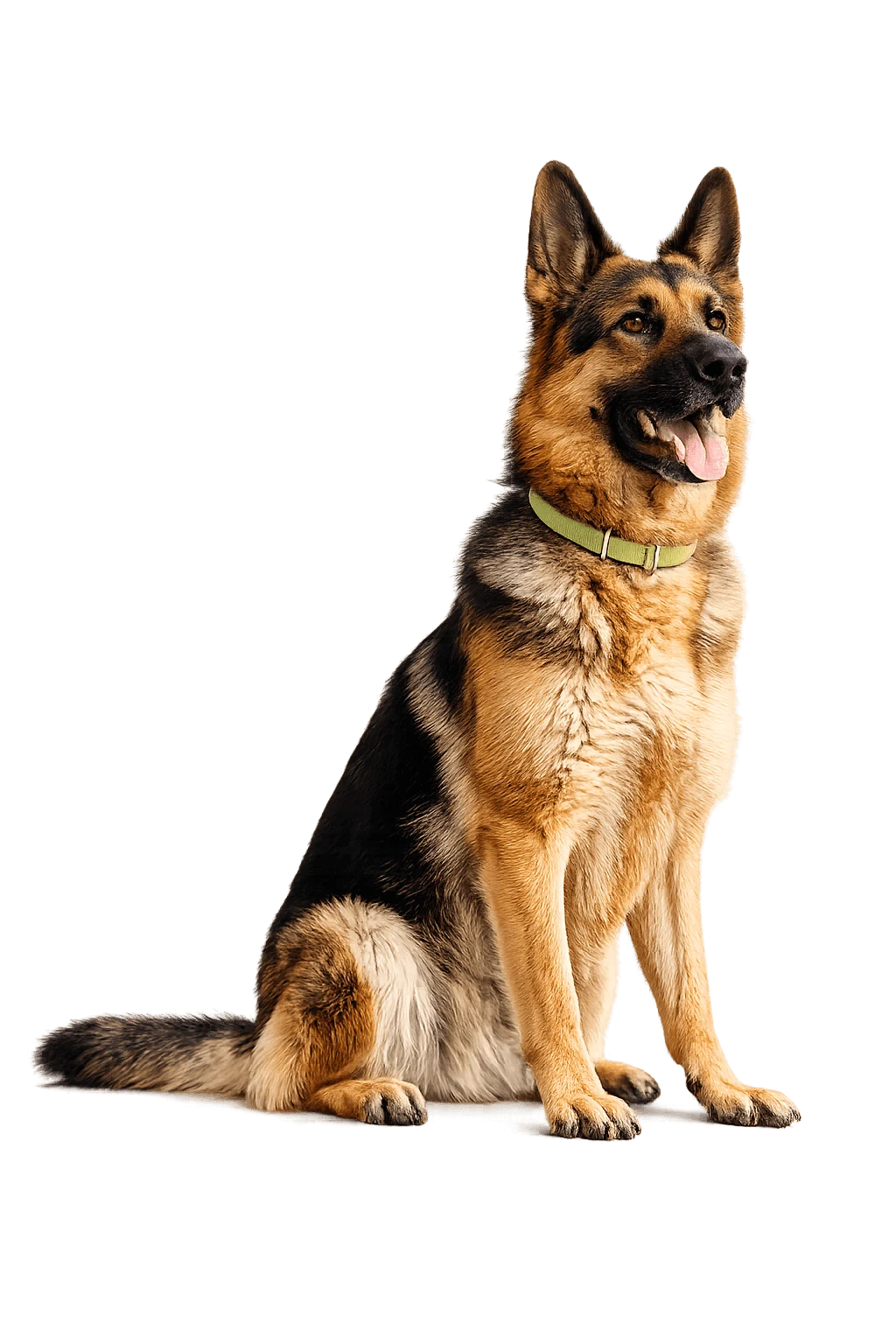
A black and tan German Shepherd standing in profile

THE BREED IN BRIEF

GERMAN SHEPHERD AT A GLANCE

A quick summary of the practical facts that shape day to day life with a German Shepherd. Use it as a starting point, then read the sections below for the detail and the qualifications behind each line.

Size
Large

Powerful, athletic pastoral breed

Royal Kennel Club breed standard and breed profile. [1][2]

ToyGiant
Typical adult height
55.5 to 65.5 cm

Dogs 60.5 to 65.5 cm, bitches 55.5 to 60.5 cm

The standard gives ideals of 63 cm for dogs and 58 cm for bitches, with 2.5 cm either side tolerated. [1]

Typical adult weight
34.8 to 40.1 kg

Median adult weights, females to males

These were median adult weights in a UK VetCompass cohort, not breed-standard limits. Individual dogs varied widely. [9]

Under 5 kgOver 40 kg
Typical lifespan
Over 10 years

Median longevity 10.3 years in a UK cohort

A 2013 UK VetCompass cohort reported median longevity of 10.3 years, and the Royal Kennel Club lists over 10 years. [2][9]

Adult exercise
Over 2 hours a day

Healthy adult dog

Royal Kennel Club and PDSA guidance for a healthy adult. [2][10]

LowHigh
Routine grooming
Several times a week, increasing during heavy shedding

Long coats need closer tangle checks behind the ears, trousers and tail. [1][10]

LowHigh
Shedding
Yes, often substantial

The dense undercoat releases dead hair throughout the year and more heavily at seasonal changes. [1][10]

LowHigh
Trainability
High learning potential, but not automatically easy

Quick learning, strength, sensitivity and guarding tendencies make skilled, consistent handling important. [1][10]

ChallengingEasy
Time alone
Short, gradually trained periods only

A poor fit for long, routine absences. Companionship and separation training matter. [10]

Lower toleranceHigher tolerance

Breed background

Breed group
Pastoral [2]
Origin
Germany [2]
Original purpose
Herding, followed by wider working, police, military, tracking, guide-dog and obedience roles [2]
Coat
Standard coat or long coat, both with a thick undercoat [1]

Lifestyle and character

Mental stimulation
High. Structured training, scent work, problem-solving and purposeful activities are important [1][10][24]
Vocalisation
Can be alert and vocal. Frequency varies by individual, environment and training [10]
First-time ownership
Possible for a highly prepared owner with professional support, but often more manageable for experienced handlers [10]
Typical character
The breed standard calls for a steady-nerved, loyal, self-assured, courageous and tractable dog. This is an ideal description, not a guarantee for every individual [1]

Individual German Shepherds vary with genetics, physical health, age, sex, early socialisation, training history, daily routine and personality. A breed description should guide your questions, not replace assessment of the individual dog. Principal sources are the Royal Kennel Club breed standard and breed profile, the UK VetCompass German Shepherd study and PDSA breed guidance. [1][2][9][10]

ORIGINS AND MODERN ROLES

WHERE THE GERMAN SHEPHERD CAME FROM

The German Shepherd Dog belongs to the Royal Kennel Club Pastoral Group. The club's breed history describes the formation of an early breed club in 1881 and the later work of Max von Stephanitz and his followers in developing and promoting a versatile German herding dog. The breed subsequently became established in police, military, tracking, guide-dog and obedience work. [2]

That background helps explain the modern breed's defining themes: physical endurance, close attention to a handler, scenting ability, environmental awareness and a readiness to work. The breed standard describes a dog that should be balanced, free from exaggeration, resilient, tireless and capable of an enduring, ground-covering gait. [1]

Modern German Shepherds include companion, show, sport and operational working dogs. Lines may differ in appearance, arousal, working intensity and everyday manageability, but broad labels such as working line or show line do not reliably predict one individual. Prospective owners should ask about the actual temperament, health, activity level and working history of the parents and close relatives.

The Royal Kennel Club recognises both standard and long coats. It also places the breed in Breed Watch Category 2. Current points for judges to monitor are incorrect hind conformation or poor rear movement, and nervous temperament. Breed Watch is an early-warning and monitoring system rather than a statement that every German Shepherd has these features. [4][20]

TEMPERAMENT AND PERSONALITY

WHAT A GERMAN SHEPHERD IS REALLY LIKE TO LIVE WITH

A sound German Shepherd should be composed enough to assess situations, responsive enough to work with a handler and confident without being indiscriminately confrontational. The Royal Kennel Club standard describes the desired temperament as steady of nerve, loyal, self-assured, courageous and tractable, and says the dog should not be nervous, over-aggressive or shy. [1]

In everyday homes, the breed is often highly attentive to people and surroundings. Many individuals enjoy learning, carrying objects, searching, tracking, obedience exercises and tasks that involve sustained engagement with an owner. Their intelligence is most useful when owners provide structure. It can become inconvenient when a bored dog learns to patrol windows, rehearse barking, chase movement or make its own decisions about visitors.

German Shepherds can form strong attachments to their household. That attachment should be supported by calm independence training from puppyhood so the dog can rest away from people and cope with short absences. A dog that is constantly followed, over-stimulated or never taught to settle may struggle when routines change.

Guarding and alert behaviour deserve particular attention. The breed's work history and PDSA guidance support the need for careful socialisation and training around visitors, unfamiliar people, dogs and environments. Socialisation should not mean forcing a puppy to interact with everyone. It should build calm, neutral confidence and the ability to look to the handler for guidance. [10]

What owners often love

  • Strong engagement with training and shared activities
  • The ability to learn complex routines and discriminate between different cues
  • Athleticism suited to walking, tracking, scent work and obedience
  • Close awareness of the household and a desire to participate
  • A practical double coat suited to outdoor activity in varied UK weather
  • Versatility across companion, assistance, sport and operational roles where temperament and training are appropriate [1][2]

What owners may underestimate

  • The amount of calm training required, not just exercise
  • How quickly alert barking, fence running or visitor reactivity can become rehearsed habits
  • The physical leverage of a large adolescent dog before lead skills are reliable
  • The importance of early, controlled exposure to people, dogs, traffic, handling and veterinary procedures
  • The volume of coat shed into the home
  • The long management horizon: mobility, weight and joint comfort may need increasing attention with age

FAMILY LIFE AND CHILDREN

ARE GERMAN SHEPHERDS GOOD FAMILY DOGS?

Many well-socialised German Shepherds can live successfully with children, but interactions should still be supervised. The breed's large frame, speed and enthusiasm mean even friendly play can knock over a toddler. Adult dogs range from calm and patient to bouncy and boisterous, depending on the individual, training and socialisation. [10]

Homes with babies and toddlers should plan management rather than relying on verbal control alone. Use gates, separate rest areas and adult supervision. Children should not climb on the dog, pull ears or tail, disturb sleep, approach food, take toys or crowd the dog in a bed or crate. The dog needs a quiet place where children know not to follow. [11][12]

For primary-age children, structured activities can work well: scattering food for a supervised search, helping to prepare enrichment, or practising simple cues with an adult. Fast chasing games, wrestling and rough handling are poor choices because they can increase arousal and blur boundaries.

Older children may enjoy participating in training, but adults remain responsible for walks and management. A large German Shepherd can be too strong for a child to hold safely if it lunges, chases or reacts to another dog.

A German Shepherd that shows fear, freezing, avoidance, growling, hard staring or escalating arousal around children needs immediate management and advice from a suitably qualified behaviour professional. Do not punish warning signals.

OTHER DOGS AND HOUSEHOLD PETS

LIVING ALONGSIDE OTHER ANIMALS

German Shepherds are not automatically sociable or antisocial with other dogs. Early experiences, genetics, health, training and the other dog's behaviour all matter. PDSA notes that some may become pushy with other dogs as they mature, while careful socialisation and training can support calmer interactions. [10]

Puppy socialisation should prioritise good-quality experiences with stable dogs rather than high-volume, uncontrolled greetings. Teach the puppy to disengage, return to the handler and walk past dogs without needing contact. This is especially valuable as the dog becomes larger and more physically confident.

Many German Shepherds can live with a cat they have been raised with. A dog with no cat experience, a strong chase response or a history of pursuing small animals requires slow, barrier-based introductions and ongoing management. Never assume that peaceful behaviour with one household cat means the dog is safe with unfamiliar cats outside.

Small pets such as rabbits, rodents and birds should be protected by secure, separate housing. Breed history alone cannot predict prey drive, but a large, fast dog can cause injury during a single chase or paw strike even without predatory intent.

In multi-dog homes, manage high-value food, chews, resting places and narrow spaces until relationships are well understood. Feeding separately is usually the simplest option.

EXERCISE AND MENTAL STIMULATION

MORE THAN TWO HOURS, AND MORE THAN WALKING

The Royal Kennel Club lists the breed as requiring more than two hours of exercise per day, and PDSA gives a minimum of two hours for a healthy adult. That time should be spread across the day and should not consist only of repetitive ball throwing or high-speed running. [2][10]

The exact amount should change with health, fitness, weather and the dog's ability to recover. More activity is not always better. A dog that remains frantic, mouthy or unable to settle may need better arousal management and more sleep rather than another intense session.

A useful adult routine combines

  • Purposeful walking at varied speeds
  • Sniffing and exploration
  • Lead-skills practice
  • Recall or long-line work
  • Short obedience or trick sessions
  • Searching, tracking or scent games
  • Controlled play
  • Quiet recovery and sleep

A realistic day for a healthy adult

  • Morning: 45 to 60 minutes of walking with sniffing, loose-lead practice and a few short training repetitions
  • Midday: toilet break, 10 to 15 minutes of scent work or food-searching, then rest
  • Late afternoon or evening: 60 to 75 minutes combining walking, safe off-lead exercise or long-line exploration, recall practice and controlled play
  • At home: a brief settling exercise, chew or food puzzle, followed by uninterrupted sleep

Puppies

German Shepherd puppies grow quickly and should not be treated as miniature endurance dogs. Use short, varied outings, free movement on safe surfaces, play, exploration and training. Avoid forced long-distance running, repeated jumping, sustained stair work and high-impact fetch. PDSA advises owners of breeds at risk of hip and elbow dysplasia to seek veterinary guidance on appropriate feeding and exercise during growth. [5][6][10]

Adolescents

Adolescence can bring greater strength, environmental sensitivity, chase interest and testing of previously learned cues. Keep using long lines where recall is not reliable. Continue calm exposure rather than assuming early puppy socialisation is complete.

Older dogs

Reduce intensity according to recovery and medical advice rather than stopping activity completely. Monitor nail wear, paw placement, muscle loss, stiffness, slipping, continence and the ability to rise. Progressive hind-limb incoordination needs veterinary assessment because orthopaedic and neurological causes can look similar.

TRAINING AND BEHAVIOUR

QUICK TO LEARN IS NOT THE SAME AS EASY TO OWN

German Shepherds often learn cues quickly, but intelligence and ease of ownership are not the same thing. A dog may understand a cue while still being too aroused, worried or motivated by the environment to respond. Training therefore needs to develop emotional regulation as well as technical obedience.

Reward-based methods are the safest foundation. Harsh corrections can increase conflict, suppress warning signals or add negative associations to people and dogs. Use food, toys, access to sniffing, movement and social interaction according to what the individual values.

Keep sessions short enough that the dog remains accurate. German Shepherds may offer intense, fast behaviour. Reinforce calm starts, pauses and release cues rather than rewarding frantic anticipation.

Training priorities

  1. 01Name response and engagement, so checking in becomes a habit before the environment gets more interesting
  2. 02Loose-lead walking, started before the adolescent dog has adult strength
  3. 03Recall and an emergency stop, using a long line until responses are reliable
  4. 04Settle on a mat, giving a clear off-switch for homes, cafes, travel and visitors
  5. 05A calm visitor routine using gates, distance and a trained station
  6. 06Handling and husbandry, pairing rewards with ear checks, paw handling, brushing and mock veterinary procedures
  7. 07Neutrality around dogs and people, aiming for calm observation rather than greeting everyone
  8. 08Gradual separation training, teaching rest behind a gate and brief absences

Alert barking, pulling, chasing, jumping up, grabbing the lead, over-arousal around play, guarding spaces, reactivity and difficulty settling can all occur. Pain, gastrointestinal discomfort, ear disease or musculoskeletal problems can contribute to behaviour change, so veterinary assessment should accompany behaviour support where onset is sudden or escalating.

SIZE, HOME AND PRACTICAL LIVING

WHAT A LARGE, STRONG DOG NEEDS FROM YOUR HOME

German Shepherds are large, strong dogs. The breed standard's ideal height is 63 cm for dogs and 58 cm for bitches, with 2.5 cm either side tolerated. UK VetCompass data recorded median adult weights of 40.1 kg for males and 34.8 kg for females, with wide variation. [1][9]

A large house is not a substitute for exercise, and a smaller home is not automatically unsuitable. The practical questions are whether the dog can rest without blocking busy routes, whether the owner can manage stairs and entrances, whether there is safe outdoor access, and whether daily exercise and training can be delivered consistently.

Flat or apartment living

A settled adult may live in a flat if exercise, toileting and noise are managed. Challenges include shared corridors and lifts, frequent close encounters with neighbours and dogs, alert barking at communal sounds, carrying an injured dog if stairs or lifts fail, and the lack of a private garden during illness or puppy toilet training. A highly vigilant or vocal individual may find dense communal living difficult.

Garden and fencing

Secure fencing is important. The fence should prevent jumping, climbing, digging and rehearsed fence running. Avoid leaving the dog outside to patrol for long periods, because this can strengthen barking and territorial behaviour.

Stairs and flooring

Use non-slip flooring, especially for puppies, older dogs and dogs with joint or neurological problems. Reduce repeated stair use during growth and seek veterinary advice after injury or if mobility changes. Rugs and runners can improve traction.

Travel and household impact

Use a properly secured crate, guard or restraint suitable for a large dog, and plan enough space for the dog to lie comfortably. Train car entry, exit and waiting. At home, expect hair on floors, furniture and clothing, and mud in the undercoat, feathering and tail. A washable bed and an accessible cleaning routine are practical necessities.

GROOMING, COAT AND SHEDDING

TWO COATS, AND PLENTY OF HAIR EITHER WAY

The breed standard recognises two coat varieties. The standard coat has a straight, hard, close-lying outer coat with a thick undercoat. The long coat has a longer outer coat, a thick undercoat and more feathering on the ears, legs and tail. [1]

German Shepherds shed. PDSA recommends brushing a few times a week to remove dead hair, reduce matting and limit build-up in the home. Long coats need more careful checks behind the ears, around the trousers, armpits and tail. [10]

No dog can be guaranteed not to trigger allergies. Hair, dander and saliva can all contribute to reactions.

Most standard-coated German Shepherds do not require clipping. Long coats may benefit from professional help with dense feathering, but routine shaving can interfere with the protective double coat unless medically required.

Two to four times a week

  • Brush through the coat to the skin without scraping
  • Use an undercoat-appropriate tool gently
  • Check behind the ears, armpits, trousers and tail for tangles
  • Inspect skin for redness, parasites, moist areas or new lumps
  • Check paws, pads and nails
  • Look and smell inside the outer ear without inserting anything into the canal

During heavy shedding

  • Brush daily if the skin tolerates it
  • Use shorter sessions rather than aggressive de-shedding
  • Vacuum bedding and resting areas more frequently
  • Stop if the skin becomes sore or the dog shows discomfort

Monthly or as needed

  • Check nail length, because active dogs may still need trimming
  • Review dental care and toothbrush tolerance
  • Wash bedding and clean grooming tools
  • Bathe only when needed or on veterinary advice, using dog-appropriate products and rinsing thoroughly
  • Dry the undercoat fully after swimming or bathing

Ear care matters because otitis externa was the most frequently recorded specific disorder in the 2013 UK VetCompass German Shepherd study. Persistent head shaking, odour, redness, discharge or pain requires veterinary assessment rather than repeated home cleaning. [9]

FEEDING AND HEALTHY WEIGHT

LEAN BODY CONDITION IS A PRACTICAL PRIORITY

German Shepherd puppies need a complete diet appropriate for growth and adult size. Growth should be steady rather than maximised. Overfeeding and inappropriate exercise during development can add stress to immature joints, so owners should discuss growth, body condition and activity with their vet. [5][6][10]

For adults, use the feeding guide as a starting point and adjust according to body condition, activity, neuter status, age and health. A body-condition assessment is more useful than aiming for a single breed weight, because German Shepherds vary in sex, frame and muscle.

The 2013 VetCompass study recorded overweight and obesity among the most prevalent specific disorders in German Shepherds under UK primary veterinary care. Maintaining a lean body condition is therefore a practical health priority. [9]

Practical feeding habits

  • Measure meals rather than free-pouring
  • Include training treats in the daily allowance
  • Use some food for calm training and scent work rather than adding extra calories
  • Split the daily ration into more than one meal where appropriate
  • Avoid intense exercise immediately around a large meal
  • Monitor stool quality, appetite and weight trend
  • Seek veterinary advice for persistent diarrhoea, weight loss despite appetite, recurrent vomiting, abdominal enlargement or reduced interest in food

Do not add supplements routinely without veterinary guidance. A complete diet should provide the required nutrients unless an individual medical need has been identified.

RECOGNISED HEALTH CONSIDERATIONS

HEALTH THEMES GERMAN SHEPHERD OWNERS SHOULD UNDERSTAND

Many German Shepherds live long and healthy lives. A recognised breed predisposition does not mean that an individual dog will develop the condition. The information below is general breed guidance rather than a diagnosis. Speak to a vet about symptoms or concerns affecting an individual dog.


The 2013 UK VetCompass study included 12,146 German Shepherds in the wider database and reviewed detailed disorder data from a random sample. The most prevalent specific disorders recorded were otitis externa, osteoarthritis, diarrhoea, overweight and obesity, and aggression. The study's median longevity estimate was 10.3 years. These findings describe dogs attending participating UK veterinary practices in 2013, and should not be treated as a prediction for a puppy born today. [9]

1. Hip dysplasia

Hip dysplasia is a complex developmental condition in which the hip joint does not form or fit normally. It is influenced by multiple genes and environmental factors, and German Shepherd Dogs are among the breeds for which hip screening is officially recommended. [3][5] Signs owners may notice include stiffness, reluctance to jump or climb, difficulty rising, reduced exercise tolerance, altered gait, lameness or discomfort after activity. A vet may investigate with physical and orthopaedic examination, gait assessment and imaging, and other causes of hind-limb discomfort may need to be excluded. General management can include maintaining a lean body condition, adapting exercise, pain management, rehabilitation and, in selected cases, surgical options, with advice depending on age and severity. For breeding, both intended parents should be scored through the BVA and Royal Kennel Club Hip Dysplasia Scheme. The result estimates radiographic hip status at the time of screening and does not guarantee that the dog or its offspring will remain free of hip disease. Estimated breeding values, where available, add family information to the individual score. [3][5] Screening data describe radiographic phenotype and inherited risk, while clinical pain and function vary between dogs.

2. Elbow dysplasia

Elbow dysplasia is a complex inherited condition in which components of the elbow joint develop abnormally, and progressive wear can lead to pain, stiffness, lameness and reduced function. German Shepherds are listed among the breeds most commonly at risk, and elbow grading is a Good Practice requirement in the current Health Standard. [3][6] Signs owners may notice include forelimb lameness, a shortened stride, stiffness after rest, reluctance to exercise or altered paw placement. Investigation involves orthopaedic examination and specialist-assessed radiographs, with further imaging where clinically indicated. Management can include weight control, modified activity, pain management, rehabilitation and selected surgical procedures. Both parents should be screened at 12 months or older through the BVA and Royal Kennel Club scheme. Elbows receive a grade from 0 to 3, with the higher elbow determining the dog's overall grade, and the scheme advises using estimated breeding values where available. [6] A low grade reduces known risk but cannot guarantee unaffected offspring, because inheritance is complex.

3. Degenerative myelopathy

Degenerative myelopathy is a progressive spinal-cord disorder that usually begins later in life. Early signs can include hind-limb incoordination, scuffing and weakness, progressing over time. The Royal Kennel Club lists a DNA risk test for the breed under Best Practice. [3][7] Signs owners may notice include dragging or wearing of rear nails, crossing hind feet, swaying, difficulty rising, weakness or progressive loss of hind-limb function. A vet may investigate with neurological examination and tests to exclude other causes such as orthopaedic disease, spinal compression or other neurological conditions, and definitive diagnosis can be difficult during life. Management is supportive: mobility management, environmental adaptation, rehabilitation and quality-of-life monitoring under veterinary guidance. The SOD1 DNA test estimates genetic risk, and the Royal Kennel Club stresses that two copies of the associated variant do not mean clinical disease is inevitable, while absence of the variant does not guarantee that similar neurological signs cannot occur. [7] The test has incomplete penetrance and does not replace clinical diagnosis.

4. Osteoarthritis and mobility decline

Osteoarthritis was one of the most commonly recorded specific disorders in the UK VetCompass German Shepherd study. It may develop secondary to joint dysplasia, injury, age-related change or other orthopaedic disease. [9] Signs owners may notice include stiffness, slowing down, difficulty rising, hesitation on stairs, altered gait, reduced play, irritability when touched, or changes in sleep and posture. Investigation covers history, physical and orthopaedic examination, gait assessment and imaging where appropriate. General management includes lean body condition, tailored activity, pain relief, rehabilitation, environmental changes and monitoring. Hip and elbow schemes can reduce inherited risk associated with those joints but do not remove the possibility of age-related joint disease. Prevalence figures come from primary-care records and reflect recorded diagnoses rather than every affected dog.

5. Exocrine pancreatic insufficiency

Exocrine pancreatic insufficiency, often shortened to EPI, occurs when the pancreas does not produce enough digestive enzymes, so food is poorly digested and absorbed. German Shepherd Dogs are a recognised breed in published research, and pedigree work indicates a heritable component that does not follow a simple single-gene pattern. [17] Signs owners may notice include weight loss despite a strong or ravenous appetite, frequent bulky stools, pale or greasy faeces, flatulence and poor coat condition. A vet may investigate through clinical history and blood testing, particularly serum trypsin-like immunoreactivity, alongside assessment for related nutritional deficiencies or gastrointestinal disease. Management involves veterinary-prescribed pancreatic enzyme replacement, diet management and treatment of associated deficiencies or intestinal problems. There is no routine Royal Kennel Club screening scheme listed for EPI, so breeders should be open about affected dogs and close relatives, and should not present the absence of a DNA test as absence of inherited risk. Published inheritance work involves small, selected research populations and does not yield a simple test for puppy buyers.

6. Perianal fistula, also called anal furunculosis

Perianal fistula is a painful inflammatory disease that produces ulceration and draining tracts around the anus. German Shepherd Dogs are strongly over-represented in published case populations, and UK and Finnish research has identified genetic associations involving immune-response genes. [16] Signs owners may notice include licking or biting around the tail base, pain when passing faeces, reluctance to sit, straining, blood or discharge, foul odour, irritability or visible sores. A vet may examine the perianal region, often with sedation because lesions can be painful, alongside additional tests to assess severity or associated disease. Management can include immunomodulatory medical treatment, hygiene, pain management and monitoring, and some cases require additional procedures. There is no routine public DNA screening scheme in the Royal Kennel Club Health Standard, so family history remains relevant. Genetic association does not mean every genetically susceptible dog develops disease, and treatment studies often involve referral populations.

7. Gastric dilatation-volvulus

Gastric dilatation-volvulus, often called GDV or bloat, is an acute emergency in which the stomach expands and may twist. German Shepherd Dogs were over-represented in a published veterinary critical-care case series, although risk varies between individuals and studies. [18] Signs owners may notice include repeated unproductive retching, rapid abdominal enlargement, restlessness, drooling, distress, weakness or collapse. Seek emergency veterinary care immediately and do not wait for symptoms to settle. A vet will carry out emergency examination, imaging and blood tests while stabilisation begins, and management involves urgent decompression, shock treatment and surgery where volvulus is present. There is no screening test in the current Health Standard, though owners of deep-chested large dogs can discuss individual risk and preventive gastropexy with their vet, particularly when another abdominal procedure is planned. Older case series may be influenced by referral patterns and changing treatment, so they support awareness rather than an individual probability.

8. Ear disease

Otitis externa, inflammation of the external ear canal, was the most prevalent specific disorder recorded in the 2013 UK VetCompass study of German Shepherds. [9] Signs owners may notice include head shaking, scratching, redness, odour, discharge, pain or reluctance to have the ears touched. A vet may examine the ear canal and eardrum, use microscopy and carry out further testing for recurrent disease. Management covers treatment of infection or inflammation and investigation of underlying contributors such as allergy, moisture, parasites or canal changes. No routine breed-specific screening scheme is listed, but recurrent ear disease in close relatives should still be discussed honestly. The VetCompass prevalence was based on clinical records from 2013 and does not establish a single inherited cause.

Health notice: this is general breed guidance rather than a diagnosis. Speak to a vet about symptoms or concerns affecting an individual dog.

POLICY TERMS THAT MATTER

WHAT THIS MEANS FOR PET INSURANCE

A breed predisposition does not mean your dog will develop a condition, and it does not tell you whether treatment would be covered. Cover depends on the individual policy, its exclusions and limits, when signs or symptoms first appeared, and your pet's medical history.

These are the terms worth reading closely if you are arranging or comparing cover for a German Shepherd. Wording varies between providers, so check the policy documents rather than assuming any of them applies.

Pre-existing condition wording

Anything already recorded in your pet's veterinary history may be relevant to an insurer's assessment. Definitions differ between providers, so read this one first.

Hereditary and congenital wording

Inherited and congenital conditions are never automatically covered. Check whether they are included, excluded or limited.

Chronic and recurring conditions

Long term conditions are managed year after year, so check whether treatment continues at renewal and how limits apply across policy years.

Veterinary fee limit

The overall limit, and whether it resets each year, usually matters more for a large claim than any single headline feature.

Referral, diagnostics and imaging

Specialist referral, scans and investigations are sometimes capped separately from treatment.

Bilateral and related condition definitions

Where a second problem is treated as related to the first, it draws on the same limit rather than starting fresh.

Excess and percentage contribution

Some policies add a percentage contribution as a pet gets older. The age threshold and how the contribution applies vary, so check the policy terms.

For what hereditary, congenital, pre-existing, related and bilateral actually mean, see our guide to how breed affects pet insurance.

This is general information, not a personal recommendation.

PUPPY BUYING, HEALTH TESTS AND RESCUE

WHAT TO CHECK BEFORE YOU COMMIT

The Royal Kennel Club Health Standard in force at the research date lists hip and elbow screening as Good Practice for German Shepherd Dogs. Best Practice requires Good Practice plus the DNA test for degenerative myelopathy and the BVA, Royal Kennel Club and ISDS Eye Scheme. [3]

Responsible breeders should welcome detailed questions and provide genuine certificates. The RSPCA and Dogs Trust advise seeing puppies with their mother where they were bred, avoiding rushed transactions, checking health paperwork and not taking a puppy younger than eight weeks. [13][14] All dogs in the UK must be microchipped and registered by eight weeks of age, so ask for evidence and update the keeper details after transfer. [15]

Watch both parents move at a walk and trot. Look for comfortable, coordinated movement rather than dramatic angulation or a forced show stance. The breed standard requires structural balance and says working ability must not be sacrificed for appearance, and current Breed Watch points include incorrect hind conformation or poor rear movement. A visual assessment cannot diagnose hip or elbow status, so check scheme results as well. [1][4]

A rescue German Shepherd may be a puppy, adolescent, retired working dog or older companion. A good rescue match is based on the individual dog, not assumptions about why it entered care. Some dogs need an experienced, low-traffic home, while others may fit family life well after assessment and a gradual transition.

Practical breeder checklist

  • Show original, verifiable hip scores for both parents
  • Show elbow grades for both parents
  • Show degenerative myelopathy DNA results and explain the mating decision
  • Show recent eye certificates for both parents
  • Provide registered names and microchip details so results can be checked independently
  • Discuss health and longevity in parents, grandparents, siblings and previous litters
  • Discuss any history of EPI, perianal fistula, epilepsy, GDV, chronic skin or ear disease, mobility problems and significant behaviour concerns
  • Let you meet the litter with the mother where the puppies were raised
  • Explain how puppies are exposed gradually to household sounds, surfaces, handling, car travel and different people
  • Demonstrate that the mother is comfortable, mobile and able to stand and move freely
  • Avoid selling on colour, size claims, straight back marketing or working and show labels alone
  • Provide vaccination, parasite-control, veterinary and microchip records
  • Give you time to decide, and be willing to take the dog back if circumstances change

Rescue considerations: ask the rehoming organisation about

  • Known medical and behavioural history
  • Response to adults, children, dogs, cats and visitors
  • Handling tolerance and veterinary behaviour
  • Ability to settle indoors
  • Behaviour when left
  • Lead skills and reactivity
  • Guarding of food, toys, people or spaces
  • Mobility, ear and skin history
  • Current medication and exercise limits

Hip scoring

A radiographic screening scheme. Both sire and dam should be tested before breeding, at 12 months or older. It assesses features associated with hip dysplasia on standardised radiographs, and results can be checked through the Royal Kennel Club Health Test Results Finder and supporting BVA and Royal Kennel Club records. It cannot guarantee pain-free hips or unaffected puppies, because hip dysplasia is complex and influenced by genes and environment. [5]

Elbow grading

A radiographic screening scheme. Both sire and dam should be tested before breeding, at 12 months or older. It assesses radiographic signs associated with elbow dysplasia, grading from 0 to 3 and recording the higher of the two elbows. Results can be checked through the Royal Kennel Club Health Test Results Finder. It cannot guarantee that offspring will have normal elbows or never develop lameness. [6]

Degenerative myelopathy DNA test

A DNA risk test for breeding dogs where the Health Standard recommends it. It assesses genotype at the recognised SOD1 risk variant, and results can be checked in Royal Kennel Club records when an accepted laboratory is used and the result is recorded. An at-risk genotype does not prove that the dog will develop clinical degenerative myelopathy, and a clear result does not exclude every cause of progressive hind-limb weakness. [7]

Eye examination

A clinical examination by an approved eye panellist. Both intended parents should be examined, and the Health Standard states examinations should be within 12 months before mating. It assesses inherited and suspected inherited eye conditions visible at examination, and results can be checked in Royal Kennel Club records where recorded. A clear examination is a result at a point in time and does not guarantee that later-onset eye disease will not develop. [3][8]

LIFE STAGES

WHAT CHANGES AS A GERMAN SHEPHERD GROWS UP

Puppy

Priorities are safe socialisation, sleep, toilet training, calm handling, short training sessions and controlled physical development. Introduce surfaces, traffic, people, friendly dogs, grooming and veterinary handling gradually. Avoid over-exercising a rapidly growing puppy, and begin lead skills before adult strength develops.

Adolescent

Expect fluctuations in focus and confidence. Continue long-line recall, calm visitor routines and dog neutrality. Adolescents may become more vigilant or reactive as they mature. Increase exercise progressively while protecting recovery and avoiding repetitive impact.

Adult

A healthy adult usually needs more than two hours of varied activity daily plus purposeful mental work. [2][10] Maintain lean body condition, refresh handling skills, monitor ears and mobility, and keep training relevant to everyday life.

Senior

Reduce intensity according to recovery and medical advice rather than stopping activity completely. Monitor nail wear, paw placement, muscle loss, stiffness, slipping, continence and the ability to rise. Add non-slip flooring, accessible beds and shorter, more frequent walks. Progressive hind-limb incoordination needs veterinary assessment because orthopaedic and neurological causes can look similar.

TIME COMMITMENT AND EVERYDAY OWNERSHIP

THE HONEST WEEKLY WORKLOAD

German Shepherd ownership involves more than a long walk. The recurring work is steady rather than occasional.

What ownership regularly involves

  • Two or more hours of adult exercise on most days
  • Short daily training and impulse-control practice
  • Mental enrichment and scent work
  • Several grooming sessions each week
  • Cleaning shed hair and mud
  • Planning calm visitor and delivery routines
  • Arranging suitable care during work, illness and holidays
  • Maintaining a vehicle and equipment suitable for a large dog
  • Monitoring weight, ears, skin, gait and mobility
  • Adapting the home and exercise plan as the dog ages

A typical day

  • 07:00 toilet break, measured breakfast and quiet time
  • 08:00 a 45 to 60 minute walk with sniffing and lead training
  • Late morning rest
  • Midday toilet break and a 10 minute scent search or handling session
  • Afternoon rest, chew or food puzzle
  • Evening 60 to 75 minute walk, long-line exploration, obedience, tracking or controlled play
  • After exercise, cool-down, paw and coat check, then a meal after an appropriate settling interval
  • Night, brief grooming or dental care, then uninterrupted rest

A typical week

  • Several varied walking routes
  • Two or three focused training sessions beyond everyday practice
  • At least one longer exploratory outing appropriate to fitness
  • Three or more coat-care sessions, daily during heavy shedding
  • Ear, nail, skin and mobility check
  • One low-intensity day with enrichment and shorter walks
  • Regular practice of being calm behind a gate or briefly alone
  • Planning for household visitors, deliveries or busy environments

Our quote service is not live yet while we onboard insurers. Book a demo to see how it will work.

Book a demo

ADVANTAGES AND CHALLENGES

WHO THE BREED SUITS, AND WHO MAY FIND IT DIFFICULT

Reasons people love this breed

  • Strong capacity for structured learning
  • Close engagement with owners and shared tasks
  • Versatility across walking, scent work, obedience, tracking and dog sports
  • Athleticism and stamina in a sound adult
  • Alertness and awareness of surroundings
  • Two coat varieties with practical weather protection
  • A long history of service and working roles [1][2]

Challenges to consider

  • High daily exercise and mental-work requirement
  • Large adult size and considerable physical strength
  • Potential alert barking, guarding and reactivity
  • Need for carefully planned socialisation rather than casual exposure
  • Heavy shedding and frequent grooming
  • Significant joint, neurological and gastrointestinal health considerations
  • Adolescence can be physically and behaviourally demanding
  • Long regular absences are a poor match for many individuals

A German Shepherd may suit

  • An active household able to provide more than two hours of varied daily exercise
  • Owners who enjoy training as an ongoing activity
  • People interested in scent work, tracking, obedience, working trials or other structured sports
  • Experienced owners comfortable managing a powerful dog
  • A well-prepared first-time owner with realistic expectations, good classes and access to professional support
  • Urban or rural homes with secure exercise plans and strong noise and visitor management
  • Families with older children who understand dog boundaries, where adults supervise
  • People working from home who still teach gradual independence

Another breed may be more appropriate for

  • Households wanting a low-exercise or low-training dog
  • People away from home for long, routine periods without appropriate care
  • Owners unable to manage a dog weighing around 35 to 40 kg
  • Homes where heavy shedding is unacceptable
  • People who want a dog to greet every stranger and dog without careful training
  • Households unable to separate dogs and young children when needed
  • Owners unwilling to use long lines, gates, secure fencing and structured management
  • Anyone attracted mainly by appearance, status or guarding potential

SIMILAR BREEDS

OTHER BREEDS WORTH RESEARCHING

Belgian Shepherd Dog (Malinois)

Shares the pastoral background, athleticism, handler engagement and high training capacity. The important difference is that many Malinois have even greater working intensity, speed and arousal, making them a poor easier German Shepherd alternative. May suit experienced sport or working handlers seeking a lighter, highly driven dog. [22]

Belgian Shepherd Dog (Groenendael or Tervueren)

Shares an alert pastoral character, trainability and close engagement. Coat care, sensitivity and working style vary, and these are separate varieties of the Belgian Shepherd. May suit owners who want an active pastoral dog and are prepared for substantial coat and training needs.

White Swiss Shepherd Dog

Shares a close historical relationship and a similar shepherd outline, having been developed from white German Shepherd strains. It is a separately recognised breed with its own standard and breeding population. May suit someone drawn to shepherd-type training and size who wants to research a separate temperament and health profile rather than choosing only by colour. [21]

Labrador Retriever

Shares a large, trainable, versatile service and working background. The difference is a gundog rather than pastoral heritage, with less emphasis on territorial alertness in the breed standard, though exercise and health testing remain substantial. May suit households seeking a large, trainable dog but less attracted to guarding and vigilance. [23]

Read the Labrador Retriever guide

Smooth or Rough Collie

Shares pastoral heritage, responsiveness and family participation. The build, coat and typical working style differ, and careful research into sensitivity, vocalisation and breed health is still needed. May suit someone wanting a pastoral companion without the same physical power as a German Shepherd.

No alternative is automatically easier. Assess the actual exercise, health, grooming and behaviour profile of each breed and each individual dog.

COMMON QUESTIONS

GERMAN SHEPHERD FAQS

A well-socialised, well-trained individual can live successfully in a family, but the breed's size, strength, exercise needs and potential guarding behaviour demand active adult management. It is not automatically suitable for every family.

EDITORIAL STANDARDS

HOW WE CHECK THIS GUIDE

This guide was researched using recognised UK breed, welfare and veterinary sources, including the Royal Kennel Club, British Veterinary Association and Royal Kennel Club screening information, Royal Veterinary College VetCompass research, PDSA, RSPCA, Dogs Trust, GOV.UK and peer-reviewed veterinary studies. Breed tendencies do not predict every individual dog, and health information is reviewed when official guidance or evidence changes materially.

Written by
Yeti Compare editorial team
Last updated
4 August 2026
Material update
Initial German Shepherd Dog breed guide

This guide provides general information about the breed. Individual dogs vary, and the health information is not a diagnosis or a substitute for veterinary advice.

Sources and references

KEEP READING

OTHER BREED GUIDES

Researching more than one breed? These guides follow the same format, so you can compare temperament, health and day to day needs side by side.

ALREADY HAVE A GERMAN SHEPHERD?

SEE HOW OUR QUOTE SERVICE WILL WORK

Our quote service is not live yet while we onboard insurers. Book a demo to see how it will work.