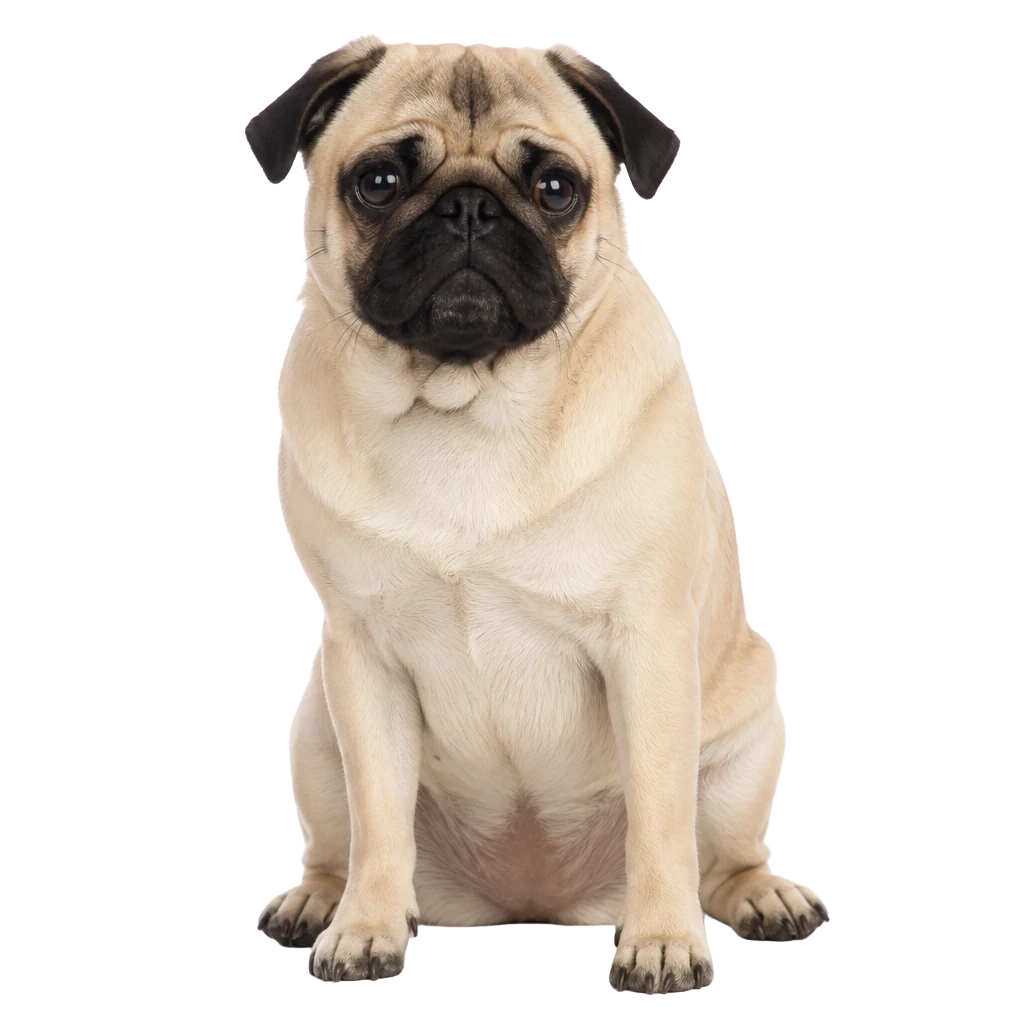
BOAS describes breathing impairment associated with flat-faced anatomy. Signs may include loud breathing while awake, snorting, wheezing, poor exercise tolerance, disturbed sleep, gagging, difficulty recovering after activity or collapse. In the 2022 VetCompass study, Pugs had 53.92 times the adjusted odds of a BOAS diagnosis and 51.25 times the adjusted odds of narrowed nostrils compared with non-Pugs. A vet may assess breathing at rest and after controlled activity. Diagnosis and severity can vary with age, body condition, excitement, temperature and assessment method. [1] [5] [10]
Because brachycephalic skull shape is associated with heat-related illness in UK primary-care research, owners should reduce exertion in warm or humid conditions and respond promptly to signs of overheating. Individual thresholds vary and there is no universal temperature cut-off. [7]
Relatively prominent eyes and shallow sockets can leave the cornea vulnerable to drying, poor eyelid coverage, hair contact and trauma. Possible signs include squinting, holding an eye closed, redness, cloudiness, discharge, rubbing or sudden light sensitivity. In the 2022 VetCompass comparison, corneal ulceration was recorded in 6.8% of Pugs and 0.7% of non-Pugs, with an adjusted odds ratio of 13.01. An earlier UK primary-care study reported a 5.42% annual prevalence in Pugs. Eye discomfort should be assessed promptly rather than monitored for several days. [1] [5] [6]
Facial and tail folds may create a warm, moist environment in which friction, yeast and bacteria contribute to inflammation. A UK primary-care study reported annual skin-fold dermatitis prevalence of 2.1% in Pugs and adjusted odds 16.27 times those of crossbreeds, and noted that records probably under-estimate frequency. Management centres on keeping folds clean and dry, addressing excess weight or harmful conformation, and treating active inflammation under veterinary direction. [1] [8]
Obesity was the most commonly recorded Pug disorder in the 2022 VetCompass study, affecting 17.4% of sampled Pugs. Owners may mistake a rounded silhouette for correct breed substance, and the breed standard expressly rejects obesity. Excess weight can compound respiratory difficulty and heat intolerance. Veterinary records often under-record excess weight, and a breed-standard weight range cannot determine whether a particular dog has an appropriate body condition. [2] [3] [5]
A shortened skull and jaw can accommodate the same number and general size of teeth as a longer-jawed dog, contributing to crowding. Crowded or rotated teeth can trap plaque and make home cleaning difficult. Signs can include bad breath, inflamed gums, dropping food, chewing on one side, pawing at the mouth or reluctance to eat hard food. There is no Pug-specific breeding test for dental crowding, and robust current UK Pug-specific prevalence estimates were not identified for this guide. [1]
Pug dog encephalitis, also called necrotising meningoencephalitis in clinical literature, is an inflammatory brain disease that is usually progressive and can be fatal. Reported signs include seizures, abnormal walking and blindness. The available DNA test is a risk test rather than a definitive affected, carrier or clear test. The Royal Kennel Club records dogs as minimal risk with zero or one copy of the tested variant, or increased risk with two copies, and its current summary estimates that approximately 12.5% of dogs carrying two copies develop the disease. A genetic risk result alone does not diagnose it. [12]
Hip dysplasia is a complex inherited condition in which the hip does not develop normally. Signs may include stiffness, difficulty rising, reluctance to jump, lameness or an altered gait. The Royal Kennel Club lists BVA and Royal Kennel Club hip screening as Best Practice for Pugs, with each hip scored radiographically to produce a total from 0 to 106, where lower scores indicate less radiographic evidence of dysplasia. Spinal problems are also recognised as a Pug health priority, although referral studies cannot estimate how common these conditions are across the whole UK Pug population. [1] [13]